What are the differences between anionic and cationic polyacrylamide?
In the fields of water treatment and solid-liquid separation, polyacrylamide (PAM) is often referred to as the "last mile of flocculation." However, many field problems are not due to "PAM not working well," but rather the incorrect selection of anionic (APAM) or cationic (CPAM) : the same dosage may result in loose flocs, turbid supernatant, high water content in the filter cake, and sludge runoff.
This article starts with commonly used SEO search dimensions (charge type, applicable water quality, sludge dewatering, PAC compatibility, dosage and pilot-scale methods), combined with common industry experience data, to help you quickly make the right choice and reduce trial and error costs.
Keywords covering: anionic PAM, cationic PAM, differences between APAM and CPAM, PAM for sludge dewatering, PAM dosage, PAC and PAM combination, sand washing wastewater flocculation, mine tailings settling, sludge conditioner
1) First, clarify the "definition": What is the essential difference between APAM and CPAM?
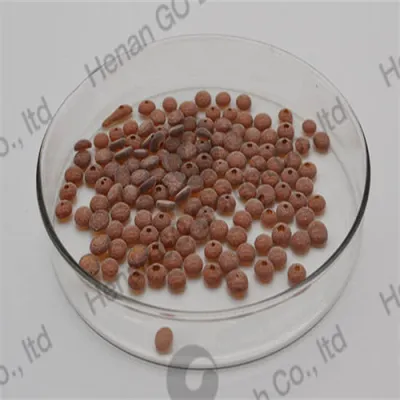
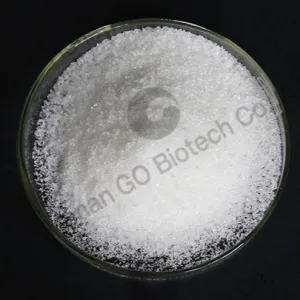
Anionic polyacrylamide (APAM) : With negatively charged groups (commonly carboxyl groups, etc.) on its molecular chain, it is better at "bridging flocculation" in inorganic particle/mud/mineral powder systems, allowing fine particles to quickly aggregate into large flocs, thereby accelerating sedimentation and clarification.
Cationic polyacrylamide (CPAM) : The molecular chain carries positively charged groups (quaternary ammonium salts, etc.), which are more friendly to negatively charged organic colloids, activated sludge, and residual sludge . It is often used for sludge dewatering and conditioning (plate and frame, belt, centrifuge, etc.). It forms denser flocs through charge neutralization and bridging , thereby improving water filtration performance.
A quick summary from the scene: "Inorganic suspended solids tend to be anionic, while sludge dewatering tends to be cationic; identify the target first, then discuss the model."
2) Core Comparison Table: From Charge to Cost, Understand at a Glance
| Comparison Dimensions |
Anionic PAM (APAM) |
Cationic PAM (CPAM) |
| electric charge properties |
negative charge |
positive charge |
| Main mechanism of action |
It mainly uses bridging flocculation to help inorganic particles aggregate. |
Primarily using charge neutralization and bridging to improve sludge water permeability |
| Typical applications |
Sand washing wastewater, mine tailings, high-turbidity water from metallurgy/building materials, and some industrial circulating water clarification |
Sludge dewatering from municipal wastewater treatment plants, sludge from paper/food wastewater, and organic sludge from printing/dyeing/chemical plants. |
| More "favorite" person |
Inorganic suspended matter such as silt, stone powder, and mineral particles |
Organic systems such as negatively charged colloids, organic matter, and activated sludge flocs |
| Common addition process |
Flocculation and sedimentation sections such as front-end clarification/sedimentation tanks, thickening tanks, and inclined tube sedimentation tanks. |
Conditioning section before dewatering machine (belt/centrifuge/plate and frame) after sludge thickening |
| Cost and Selection Difficulty |
The cost is usually relatively low ; selection is mainly based on molecular weight, solubility, and salt resistance. |
Typically, the levels are relatively high ; when selecting a model, attention should be paid to the matching of cationicity with sludge concentration. |
Additional reminder: PAM is often categorized in the market into powder, emulsion, and dispersed granules . While the form affects dissolution rate and dosing method, the core parameters determining efficacy are "anion/cation + charge density + molecular weight" .
3) Working principle: Why does the "charge direction" determine the application scenario?
3.1 Anionic PAM (APAM): Primarily used for "bridging" to facilitate faster sedimentation of inorganic particles.
When APAM molecular chains are long, they act like "long ropes," pulling dispersed particles together to form large flocs ( bridging flocculation ). In systems such as sand washing water and tailings slurry, where particles are mainly inorganic minerals, bridging can significantly increase the floc size, resulting in faster settling speed and clearer supernatant.
Experience suggests that in high-turbidity inorganic wastewater, if the raw water turbidity is about 2000–10000 NTU , under proper selection and stirring conditions, the effluent turbidity can often be reduced to 50–200 NTU or even lower (actually depends on particle size distribution, salinity, pH and compatibility with upstream coagulants).
3.2 Cation-based PAM (CPAM): Charge neutralization is more critical; the goal is "better dehydration"
Municipal and most organic sludge typically have negatively charged surfaces, strong colloidal stability, and high water content. CPAM neutralizes the positive charge, weakening the repulsive forces between particles, and then, through bridging , forms a denser floc structure, thereby improving filtration channels and reducing capillary water binding.
Experience suggests that in belt or centrifugal dewatering, properly matched CPAM can often reduce the moisture content of the filter cake by 2–8 percentage points (e.g., from 80% to 74–78%), and reduce the risk of filter cloth clogging and sludge leakage. Different types of sludge (primary/residual/mixed) will have significant differences, so small-scale tests should be used as the standard.
4) Typical application scenario: Which type of water quality do you have?
More suitable for scenarios using anionic PAM (APAM)
- Mining and mineral processing: tailings thickening, water clarification
- Washed/manufactured sand: Rapid settling of high-turbidity silt water
- Industrial inorganic wastewater: stone processing, building material cutting, and some metallurgical suspended solids.
- High SS circulating water: requires rapid formation of large flocs and improved settling efficiency.
More suitable for scenarios using cationic PAM (CPAM)
- Municipal wastewater treatment plants: Dewatering and conditioning of excess sludge/mixed sludge
- Sludge dewatering system: pre-feeding to centrifuges, belt presses, and plate and frame filter presses
- Food/Paper Industry: Treatment of wastewater with high organic sludge and colloid content
- Systems containing surfactants/oils: require stronger charge neutralization and greater floc compactness.
Can they be used interchangeably or substituted?
Direct substitution is generally not recommended: APAM often results in large, weak flocs and poor filtration in sludge dewatering ; CPAM may be too expensive for pure inorganic sedimentation and may not necessarily result in clearer sludge. In complex water conditions, staged addition (such as PAC for coagulation first, followed by PAM for flocculation) or compound/series addition can be used, but this should be confirmed through small-scale tests and not based on experience.
5) Model selection and pilot testing: Use a practical method to finalize the model.
5.1 First, examine the water quality and sludge: the four most crucial judgment points
- Water quality type : Inorganic particles (silt, mineral powder) vs. Organic colloids (activated sludge, humus, etc.)
- Treatment objectives : Clarification and sedimentation (observing the supernatant and sedimentation rate) vs. Dewatering and reducing water content (observing the water content of the sludge cake and the clarity of the filtrate)
- pH and salinity : High salt/high hardness may affect flocculation; extreme pH levels can affect charge performance.
- Equipment types : Thickening tank, dissolved air flotation, belt conveyor, centrifuge, and plate and frame conveyor have different requirements for floc strength.
5.2 Common Dosage Reference (for initial screening, not the final value)
| Scene |
Recommended type |
Experience-based dosage range (for initial screening only) |
Key points for on-site observation |
| Clarification of high turbidity water from sand washing/sedimentation |
APAM (common in medium to high molecular weight molecules) |
Approximately 0.5–5 mg/L (varying with turbidity and particle size) |
Whether the flocs are "clumped together without breaking apart", whether the supernatant is whitish, and whether the settling interface is clear. |
| Tailings/thickening pond settling |
APAM (salt resistance/calcium and magnesium resistance are a plus) |
Approximately 1–20 g/ton dry solids |
Settling velocity, overflow turbidity, underflow concentration and flowability |
| Municipal sludge dewatering (belt/centrifuge) |
CPAM (categorized by cation content) |
Approximately 2–8 kg/ton dry solids (common range) |
Floc strength, filtrate clarity, sludge runoff, sludge cake moisture content, and filter cloth cleaning pressure |
| Dewatering of organic sludge from papermaking/food processing |
CPAM (may require higher charge density) |
Approximately 3–12 kg/ton dry solids |
Does the filtrate exhibit "floating fine flocculation," yellowing/turbidity, or foaming/surfactant interference? |
Note: The table above shows common ranges for engineering applications. The final dosage is greatly affected by sludge age, temperature, shear, dissolution concentration, dosing point, and stirring intensity. On-site results should be based on pilot/scale test results.
5.3 How to conduct pilot tests more reliably: A three-step method (most commonly used by field engineers)
- Solution preparation : Powdered PAM is commonly prepared with a 0.1%–0.3% solution (1–3 g/L) for easy control; add water first and then slowly sprinkle the material to avoid clumping; the curing time is usually 30–60 minutes (depending on the product).
- Gradual dosing : Set 3–6 dosage points (e.g., 0.5, 1, 2, 3, 5 mg/L or kg/t of dry solids) and compare floc morphology and supernatant under the same stirring conditions.
- Let the indicators speak for themselves : for clarification, look at turbidity, settling time, and supernatant transparency ; for dewatering, look at cake moisture content, filtrate suspended solids (SS), sludge runoff, and filter cloth clogging . Choose "optimal overall" rather than "largest flocs".
6) How can PAC and PAM be used together more stably? Many people make mistakes in the order and placement.
In most coagulation-flocculation processes, PAC (polyaluminum chloride) is responsible for "coagulation/electricity neutralization," first "dispersing and stabilizing" the fine colloids; PAM is responsible for "flocculation/bridging," growing the micro-flocs into larger, denser particles. When the two are used in combination, it is often more economical and stable than using either one alone.
Commonly recommended order (can be used as a preliminary process design)
- PAC first, then PAM : PAC is added earlier (in the rapid mixing zone), and PAM is added later (in the flocculation reaction zone).
- Stirring intensity can be segmented : the PAC stage can be slightly stronger, while the PAM stage should avoid high shear to prevent breaking up the flocs.
- If you see "turbidity/fine flocculation" : First check the PAC level and pH, then fine-tune the PAM type and dosage, instead of blindly increasing the PAM level.
FAQ: 5 Most Frequently Asked Questions
Q1: What are the main differences between anionic PAM and cationic PAM?
The key difference lies in the charge properties and the target material : APAM is more suitable for the flocculation and sedimentation of inorganic suspended solids; CPAM is more suitable for negatively charged organic sludge, especially for dewatering and conditioning.
Q2: Which PAM method is more effective?
There is no "better," only "better match." In the same system, choosing the right type and charge density often results in a cleaner/drier finish even with reduced charge ; choosing the wrong type will only make things worse.
Q3: Can anionic PAM be used for sludge dewatering?
In most cases, the results are not ideal. Sludge dewatering depends more on charge neutralization and floc compaction, and CPAM is generally more likely to produce clearer filtrate with lower moisture content.
Q4: Why is cationic PAM usually more expensive?
CPAM involves the control of cationic monomers and charge density, resulting in higher process and raw material costs; at the same time, its "direct value" in sludge dewatering (reducing water content and stabilizing operation) is more obvious.
Q5: Does PAM have to be paired with PAC?
Not necessarily, but in many high-turbidity or colloidal stable systems, PAC+PAM is more likely to achieve stable compliance. If the raw water/sludge itself is prone to flocculation, it may be possible to use only PAM or only a coagulant.
Want to quickly determine the most suitable PAM model? Send us your water sample/sludge parameters.
If you are struggling with whether to use anionic or cationic sludge, or if you are already experiencing problems such as flocs not forming clumps, white supernatant, cloudy filtrate, high water content in sludge cake, or sludge runoff , the most time-efficient approach is to conduct a small-scale test with a water sample/sludge to determine the appropriate type and dosage in one go.
Here's the key information I recommend you prepare (the more complete, the faster).
- Water/sludge type: sand washing water, tailings, mixed sludge, excess sludge, etc.
- SS or dry solids content (g/L or %), pH, conductivity (if any).
- Equipment: Thickening tank/Air flotation/Plate and frame filter press/Belt filter/Centrifuge
- Targets: Supernatant turbidity, settling velocity, and cake moisture content, etc.
Get recommendations for selecting and conducting small-scale tests of anionic/cationic polyacrylamide (PAM) to suit your operating conditions.
Inquire now: PAM selection and application solutions (including APAM/CPAM)
After submission, suggestions can be made based on your operating conditions: charge type, ionicity/molecular weight direction, dissolution concentration, and dosing point.
.png)




-1.jpg?x-oss-process=image/resize,m_fill,h_300,w_300/format,webp)