
A CBS (CZ) COA (Certificate of Analysis) is a batch-level document used to screen suppliers and confirm whether the delivered rubber accelerator matches the agreed specification and test basis; it is mainly used by procurement, QA, and technical teams to compare lots and suppliers on a like-for-like basis.
For B2B sourcing, the most practical rule is neutral but strict: do not replace method review with price comparison or “purity” alone—values are only comparable when methods, sampling, and traceability are aligned.
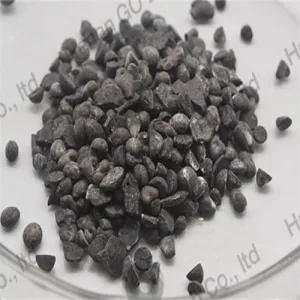
CBS (CZ) refers to the rubber vulcanization accelerator with the chemical name N-cyclohexyl-2-benzothiazolesulfenamide (molecular formula C13H16N2S2, CAS 95-33-0). It is commonly supplied as a gray-white to pale-yellow powder or granule and is used in natural rubber, reclaimed rubber, and vinyl synthetic rubber—especially SBR—either alone or in combination with accelerators such as D, DT, TT, TS.
A COA is not a marketing sheet; it is a batch-specific inspection record. Its usefulness depends on whether it clearly states what was tested, how it was tested, and which batch it represents.
A CBS (CZ) COA is only decision-ready when it provides enough information to verify identity, quality level, and batch traceability; the following fields typically deserve first-pass review.
| COA field | What it tells you | What not to assume |
|---|---|---|
| Product identification (name, CAS, batch/lot) | Confirms the material is intended to be CBS (CZ) and ties results to a specific lot | Same product name ≠ same material quality level across suppliers |
| Assay / purity | A primary indicator of composition meeting spec | Higher assay alone does not guarantee better processing or cure behavior |
| Melting point | A practical identity/consistency check for many organic accelerators | Numbers are not comparable if test method or endpoint definition differs |
| Ash | Screens inorganic residue/contamination risk | A single result does not describe long-term batch stability without traceability |
| Volatile matter / loss on drying | Signals moisture/solvent content that can affect handling and dispersion | Do not compare values if drying temperature/time are different |
| Particle-size-related descriptions (powder/granule, “ultrafine”, etc.) | Hints at dispersion behavior, dusting, and feeding consistency | A label like “ultrafine” is not a numeric distribution unless stated |
| Inspection standard & test methods (standard, method code, sampling rule) | Defines the measurement basis that makes supplier comparison valid | Without method alignment, “similar” results can lead to different conclusions |
For GO’s B2B customers, this checklist is used as a screening tool: identity + method basis + traceability are treated as the minimum set before pricing or supplier switching decisions.
COA numbers are the output of a measurement chain; if the chain changes, the numbers can shift even when the material is similar, so method consistency is a practical requirement for supplier comparison.
Neutral judgment guideline: if two COAs do not share the same test basis and batch traceability, treat the values as not directly comparable.
Comparing CBS (CZ) suppliers is a three-level decision: method alignment first, batch traceability second, and spec field consistency third; price is evaluated after those levels are satisfied.
| Comparison item | Supplier A vs Supplier B: what to check | Neutral decision rule |
|---|---|---|
| Test method consistency | Same standard/method code, same sampling rule, same reporting units | If methods differ or are missing, do not conclude “equivalence” |
| Batch traceability | Batch/lot number, production date, COA date, linkage to shipped packaging | If traceability is weak, treat the quality risk as higher |
| Spec fields alignment | Assay/purity, melting point, ash, volatile matter, appearance/particle form | Compare only after confirming same basis; otherwise, compare trends, not absolutes |
| Application fit | Powder vs granule, need for ultrafine options, handling and storage constraints | Select by process needs (feeding, dispersion), not by one COA line item |
Practical pitfall to avoid: when one supplier reports a “better-looking” number under a different method, the comparison can be misleading even though both materials are labeled CBS (CZ).
CBS (CZ) is widely used for rubber vulcanization systems and is particularly common in SBR; typical application areas include tires and general industrial rubber products.
Constraint to note: because CBS (CZ) has a bitter taste characteristic, it is generally not used for food-contact related products.
Q1: Which COA fields should I check first for CBS (CZ)?
Start with batch/lot number and identification (CAS/name), then verify the inspection standard/test methods, and then review assay/purity, melting point, ash, volatile matter, and any particle-size-related description; this sequence prioritizes traceability and comparability before numeric interpretation.
Q2: Why can two suppliers’ CBS (CZ) COAs look similar but behave differently in production?
COA values may be produced under different test methods, sampling rules, or reporting basis; additionally, differences in particle form (powder vs granule) and handling/storage conditions can influence dispersion and process stability even when the name is the same.
Q3: Is “higher purity” always the better choice when buying CBS (CZ)?
Not necessarily; higher assay can be a positive indicator, but it is not a complete quality judgement without aligned methods, traceable batches, and confirmation that other fields (volatiles, ash, melting point, particle form) meet your application requirements.
Q4: What should I do if the COA does not list the test method or inspection standard?
Treat it as an incomplete COA for supplier comparison and request the standard/method reference and sampling rule; without those, the numbers should be considered non-comparable for qualification or switching decisions.
Q5: How do packaging and storage relate to COA-based risk screening?
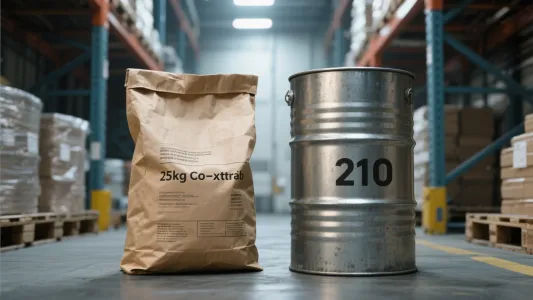
Packaging (commonly 25 kg bags or big bags) and storage (cool, dry, away from direct sunlight) affect moisture pickup and handling; when COA values are borderline, controlling storage and verifying traceability becomes more important for reducing batch-to-batch variation risk.
GO’s position is method-led and application-led: when evaluating CBS (CZ) for B2B rubber additive sourcing across regions, a COA is most useful when it enables consistent testing, clear batch traceability, and supplier comparison on the same basis—so decisions remain controlled, neutral, and repeatable.

 463
|
463
|
 anionic polyacrylamide
cationic polyacrylamide
PAM selection for wastewater treatment
industrial wastewater flocculant
polyacrylamide key parameters
anionic polyacrylamide
cationic polyacrylamide
PAM selection for wastewater treatment
industrial wastewater flocculant
polyacrylamide key parameters
 320
|
CBS rubber accelerator troubleshooting
CBS dosage control in rubber
rubber vulcanization cure rate
scorch safety and reversion control
NR SBR EPDM CBS formulation
320
|
CBS rubber accelerator troubleshooting
CBS dosage control in rubber
rubber vulcanization cure rate
scorch safety and reversion control
NR SBR EPDM CBS formulation
 308
|
GO
accélérateur de vulcanisation CBS (CZ)
sécurité au scorch (Mooney)
courbe de vulcanisation MDR/ODR
stabilité thermique et vieillissement à l’air chaud
308
|
GO
accélérateur de vulcanisation CBS (CZ)
sécurité au scorch (Mooney)
courbe de vulcanisation MDR/ODR
stabilité thermique et vieillissement à l’air chaud
 119
|
DPHP
automotive industry
high-performance plasticizers
heat resistance
low-temperature adaptability
119
|
DPHP
automotive industry
high-performance plasticizers
heat resistance
low-temperature adaptability
 170
|
Anionic PAM
Cationic PAM
Polyacrylamide flocculant
Sludge dewatering
wastewater treatment
170
|
Anionic PAM
Cationic PAM
Polyacrylamide flocculant
Sludge dewatering
wastewater treatment


.jpg?x-oss-process=image/resize,m_fill,h_100,w_100/format,webp)

.png)




.jpg?x-oss-process=image/resize,m_fill,h_400,w_400/format,webp)


