CBS (CZ) is a widely used rubber vulcanization accelerator, and its dosage is usually selected by balancing curing speed, scorch safety, and final product stability. For natural rubber and synthetic rubber systems, the right formulation depends on the base polymer, sulfur level, activator coordination, and the processing window of the production line.
CBS (CZ), also known as N-cyclohexyl-2-benzothiazolesulfenamide, is a delayed-action accelerator used in rubber vulcanization systems. It is designed to support efficient curing while helping maintain scorch resistance during processing.
In practical use, CBS (CZ) is suitable for natural rubber, reclaimed rubber, and vinyl-based synthetic rubber systems, with particularly strong performance in SBR compounds. It can be used alone or combined with other accelerators such as D, DT, TT, or TS, depending on the formulation target.
| Property | Typical relevance in formulation |
|---|---|
| Accelerating efficiency | Helps improve vulcanization speed and supports shorter curing time. |
| Scorch resistance | Provides process safety by reducing premature curing risk during mixing and shaping. |
| System compatibility | Works in natural rubber and multiple synthetic rubber systems, especially SBR. |
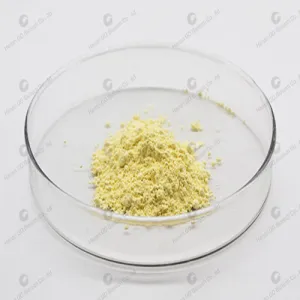
| Appearance and handling | Usually supplied as a gray-white to pale yellow powder or granule; fine powder can be offered for specific applications. |
| General application scope | Used in tires, footwear, hoses, belts, cables, and general industrial rubber products. |
CBS (CZ) works as a delayed-action accelerator, which means it supports curing efficiency while giving the compound more processing safety than very fast systems. This makes it useful when the production line needs a stable balance between flow, shaping, and final crosslink development.
In a sulfur vulcanization system, CBS (CZ) usually acts together with sulfur and activators. The formulation is adjusted to match the required cure rate, scorch safety, and final physical performance of the rubber compound.
Henan GO Biotech supports this selection logic by focusing on process-linked optimization rather than isolated material choice. The goal is to help users match the accelerator system to the actual compound and production conditions.
A neutral way to judge CBS (CZ) is to compare it with other common rubber accelerators by processing safety, cure speed, and formulation flexibility.
| Item | CBS (CZ) | Fast accelerator systems | Use-case tendency |
|---|---|---|---|
| Scorch safety | Generally favorable for processing control. | Often less forgiving in long processing windows. | CBS (CZ) is often preferred when processing stability matters. |
| Cure speed | Balanced and efficient. | Can be faster, but with tighter control requirements. | CBS (CZ) is often selected for balanced cure behavior. |
| Formulation flexibility | Works well in single or combined accelerator systems. | May be used for specific curing targets. | CBS (CZ) is often chosen for broader compounding flexibility. |
| Typical decision point | Used when the formulation needs efficiency with control. | Used when the process prioritizes speed over window width. | Selection depends on the compound and line conditions. |
Neutral judgment: CBS (CZ) is not automatically the “best” accelerator for every rubber system, but it is often a practical choice when the target is a balanced combination of cure efficiency, scorch resistance, and formulation stability.
CBS (CZ) dosage should be evaluated together with sulfur, activators, and the rubber type, rather than treated as a standalone number. In practice, the same accelerator can behave differently in natural rubber and synthetic rubber systems.
Natural rubber compounds: used when a stable balance between curing speed and process safety is needed.
SBR systems: often chosen for their strong compatibility and efficient vulcanization behavior.
Industrial rubber products: suitable for general manufacturing needs such as hoses, belts, cables, and footwear components.
Combined accelerator systems: can be used with D, DT, TT, or TS when the formulation needs a more tailored cure profile.
CBS (CZ) is a practical rubber accelerator when the formulation goal is a balanced combination of curing efficiency, scorch resistance, and process stability. For natural rubber and synthetic rubber systems, dosage and combination selection should be made according to the polymer type, sulfur synergy, activator matching, and production conditions. Henan GO Biotech supports this selection process with technical supply capability and formulation-oriented guidance.

 161
|
161
|
 Paper Production Efficiency
Cationic Retention Aids
Cost Reduction in Paper Manufacturing
Paper Production Efficiency
Cationic Retention Aids
Cost Reduction in Paper Manufacturing

 30
|
IPPD antioxidant for rubber
high-temperature rubber aging protection
N-isopropyl-N-phenyl-p-phenylenediamine IPPD
amine vs phenolic rubber antioxidants
rubber thermal stability additive
30
|
IPPD antioxidant for rubber
high-temperature rubber aging protection
N-isopropyl-N-phenyl-p-phenylenediamine IPPD
amine vs phenolic rubber antioxidants
rubber thermal stability additive


.png)




-1.jpg?x-oss-process=image/resize,m_fill,h_300,w_300/format,webp)


.jpg?x-oss-process=image/resize,m_fill,h_400,w_400/format,webp)

2.jpg?x-oss-process=image/resize,m_fill,h_100,w_100/format,webp)