Use a Symptoms → Cause Chain → Verification → Correction SOP to isolate why CBS (CZ) (N-cyclohexyl-2-benzothiazolesulfenamide, CAS 95-33-0) shows heat/durability abnormalities such as early scorch, undercure, reversion, aging-retention drift, compression set increase, blooming/tack-on-roll, or odor—then apply corrections in a controlled order.
This page defines a production-oriented troubleshooting SOP for rubber vulcanization using CBS (CZ): it helps process and quality teams identify the most likely variable group (cure system, process window, materials, storage, or test method) and verify with standard tests (Mooney scorch, MDR/ODR cure curve, hot-air aging comparisons) before adjusting formulation or conditions.
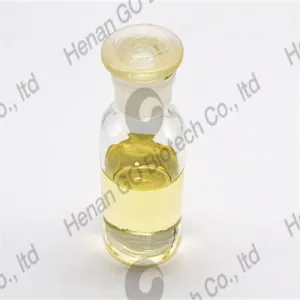
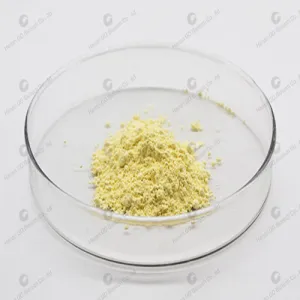
CBS (CZ) is a widely used rubber vulcanization accelerator (chemical name: N-cyclohexyl-2-benzothiazolesulfenamide, molecular formula C13H16N2S2). It is typically a gray-white to pale yellow powder or granule and is known for a balanced profile of vulcanization acceleration with anti-scorch behavior and short curing time, and it is often used alone or paired with accelerators such as D, DT, TT, TS.
Performance variation is easiest to locate when you first standardize the input record. The checklist below is intentionally practical; it supports neutral comparison between “normal lot” and “suspect lot”.
| Parameter group | What to capture (examples) | Why it matters (neutral) |
|---|---|---|
| Accelerator package | CBS (CZ) grade/form (powder/granule/ultra-fine), pairing with D/DT/TT/TS, total accelerator phr, sulfur level | Synergy and side effects can shift scorch safety, cure rate, and reversion tendency |
| Process window | Mixing temperature rise, dump temperature, storage time after mixing, cure temperature/time, press/continuous line settings | Thermal history often explains early scorch, undercure, or property drift |
| Material interactions | Filler/oil changes, antioxidant package, moisture/impurities, polymer type (NR/SBR/reclaimed/vinyl synthetic rubber) | Non-accelerator changes can mimic “accelerator issues” in scorch/cure/aging |
| Dispersion & form | Dispersion quality, particle size choice (standard vs ultra-fine), tack-on-roll observations | Dispersion differences can present as cure-curve scatter or blooming risk |
| Storage & shelf life | Storage temperature/humidity, sunlight exposure, lot age (typical shelf life: 1 year when stored dry/cool), packaging integrity | Degraded or contaminated materials can increase variability and odor/blooming probability |
Note: CBS (CZ) has a bitter taste and is not suitable for food-contact related products; keep application constraints aligned with your product compliance requirements.
The SOP works by classifying the observed symptom, then mapping it to a cause chain, confirming the hypothesis with verification tests, and only then implementing the lowest-risk correction.
Step 1 — Symptom: state what changed (and what did not).
Example outputs: “Mooney scorch time dropped”, “MDR torque plateau lower”, “after-aging retention drifted”, “compression set increased”, “visible bloom/tack-on-roll”, “odor increased”.
Step 2 — Cause chain: check variables in a consistent order.
Priority is neutral and production-oriented: process window first (mixing temperature rise, storage time, cure temperature/time) → cure system matching (CBS with D/DT/TT/TS, sulfur level) → incoming material & storage controls (moisture/impurities, packaging, shelf life).
Step 3 — Verification: test to separate “real shift” vs “measurement scatter”.
Step 4 — Correction: change one lever at a time and re-verify.
Corrections should be incremental: adjust the process window first (temperature/time/storage controls) → fine-tune the accelerator/sulfur matching next → only then escalate to incoming inspection or storage remediation. This reduces the risk of “fixing one symptom while creating another”.
When CBS (CZ) shows variation, a key judgment is whether the issue is process-driven or cure-system-driven. The table compares two common approaches.
| Approach | What you do first | Typical strength | Typical limitation |
|---|---|---|---|
| SOP: Symptoms → Cause chain → Verification → Correction | Stabilize process window and confirm with Mooney + cure curve | More reliable root-cause isolation; reduces repeated trial loops | Requires disciplined data capture and test consistency |
| Formula-only adjustment (no verification) | Change accelerator or sulfur level immediately | Can be fast for obvious undercure in stable processes | May mask the real driver (e.g., mixing heat rise, storage); can introduce new issues (scorch, bloom, odor) |
This SOP is intended for B2B rubber production and QC teams using CBS (CZ) in typical industrial rubber goods, especially where heat resistance and durability are monitored across lots.
GO focuses on technological innovation and quality-first practices for chemical additives; this page is written to support consistent troubleshooting communication between production, quality, and procurement—without over-claiming outcomes.
Q1: If early scorch appears, should we change CBS (CZ) dosage first?
Not necessarily; the neutral first move is to confirm with a Mooney scorch test and check the mixing temperature rise and storage after mixing. If the process window is stable, then evaluate cure system matching (CBS pairing with D/DT/TT/TS and sulfur level) using MDR/ODR cure curves.
Q2: Under-cure and low torque plateau—what is the quickest verification?
Use an MDR/ODR cure curve to verify whether the cure rate (and time-to-cure) shifted versus a reference batch. This helps distinguish formulation mismatch from temperature/time drift in the curing equipment.
Q3: Reversion or strength drop at elevated temperature—what should we check first?
First verify the behavior on the cure curve, then review cure temperature/time against the intended window and confirm the sulfur level vs. accelerator package. Reversion-related symptoms are often sensitive to the overall cure system balance rather than a single ingredient.
Q4: Heat-aging retention drift—how do we avoid misdiagnosis?
Compare before/after hot-air aging results using the same specimen preparation and test conditions, and then review potential changes in antioxidants, filler/oil, and moisture/impurities. Aging drift can be driven by material interactions even when CBS (CZ) is unchanged.
Q5: Blooming or tack-on-roll—does particle size matter?
It can; differences in dispersion and particle size (including ultra-fine powder options) may affect compound handling and apparent surface phenomena. Verify dispersion quality and keep other variables stable before concluding the accelerator itself is the sole cause.
Q6: Any packaging and storage notes relevant to troubleshooting?
CBS (CZ) is commonly supplied in 25 kg bags (and other industrial bag formats). For troubleshooting, record storage location, humidity/temperature exposure, sunlight exposure, packaging integrity, and lot age (typical shelf life guidance: 1 year when stored in a dry, cool place). These details help close the cause chain.
For procurement and production alignment, GO can support a consistent shop-floor checklist for CBS (CZ) performance variation using the workflow above, so teams can communicate findings with the same symptom labels, verification tests, and correction priority.




 45
|
45
|
 multi-industry applications
water treatment
polyacrylamide
efficient solutions
multi-industry applications
water treatment
polyacrylamide
efficient solutions


.png)




.jpg?x-oss-process=image/resize,m_fill,h_400,w_400/format,webp)
.jpg?x-oss-process=image/resize,m_fill,h_100,w_100/format,webp)