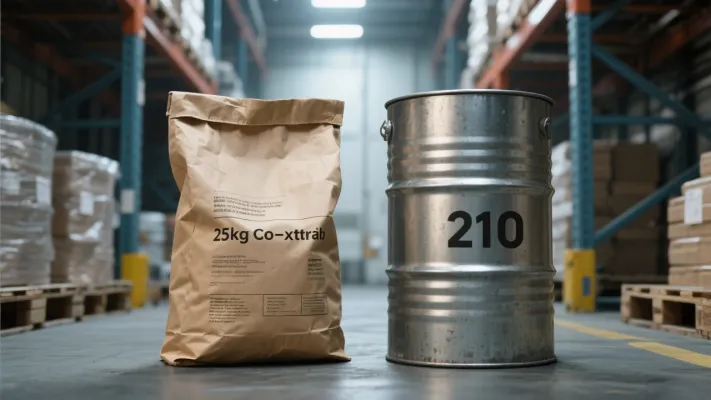
This tutorial is written for compounders and process engineers who need reliable, repeatable vulcanization behavior. It focuses on CBS (N-cyclohexyl-2-benzothiazolesulfenamide) as a primary sulfenamide accelerator, with troubleshooting tools, reference data, and process logic that can be applied on the shop floor.
In sulfur vulcanization, few variables impact production stability as strongly as the accelerator system. CBS is widely selected because it offers a balanced profile: delayed action (scorch safety), a controllable cure rate, and robust physical property development in many general-purpose rubber compounds. Yet in day-to-day manufacturing, issues such as early scorch, cure drift, under-cure, reversion, or inconsistent modulus still appear—often due to interactions among CBS, sulfur, activators (ZnO/stearic acid), fillers, oils, and process temperature history.
From a formulation perspective, CBS should be treated less as a “single knob” and more as a timing controller inside a system. The fastest improvements typically come from diagnosing the cure curve shape (not just the final properties), then adjusting the accelerator-to-sulfur ratio, the secondary accelerator (if any), and the mixing/holding conditions accordingly.
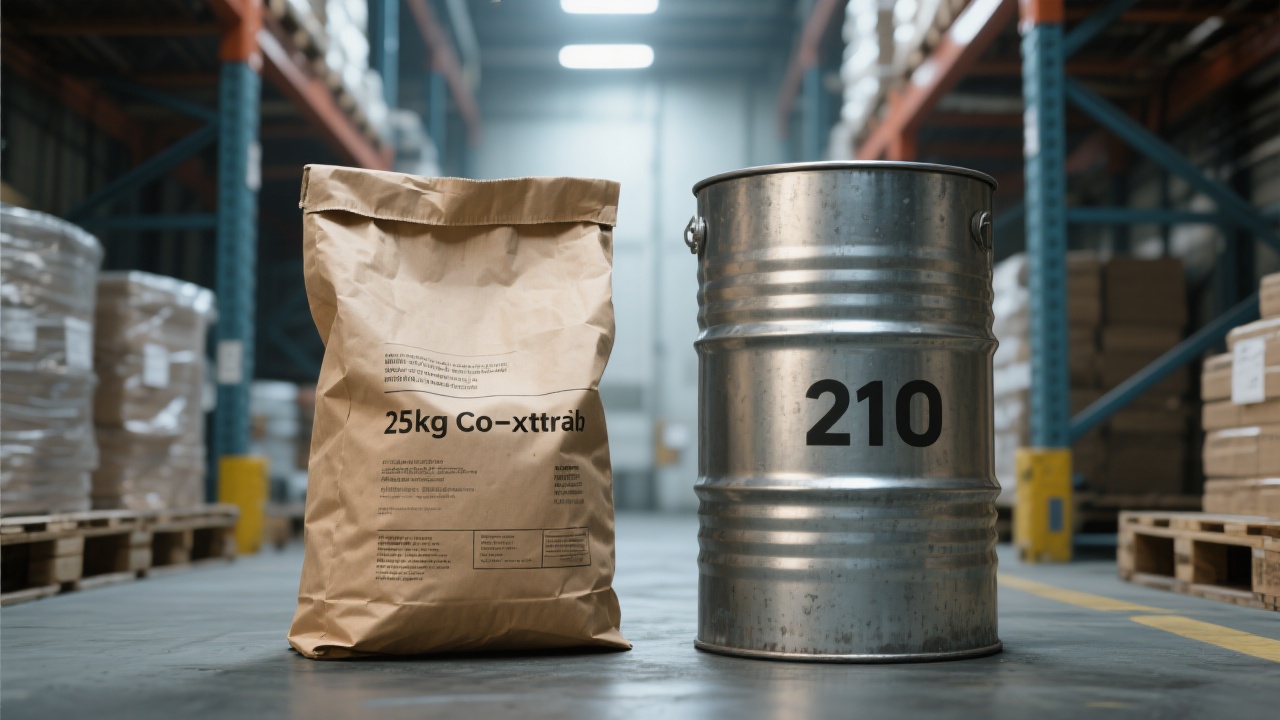
CBS is a sulfenamide accelerator that decomposes during heating to generate active benzothiazole species that promote sulfur crosslink formation. In practical terms, it tends to provide:
Many industry handbooks (e.g., general rubber technology references used in mixing and cure design) emphasize a recurring principle: cure optimization is not about maximizing cure speed; it is about shaping the cure curve to match the process window. CBS is often selected because it shapes that curve predictably—when the rest of the system is controlled.
| Parameter (typical lab reference) | Common range | Why it matters in production |
|---|---|---|
| CBS dosage (phr) in sulfur-cured NR/SBR | 0.5–1.2 phr | Balances scorch safety vs. cure speed; too low risks under-cure, too high can shift modulus and heat build-up. |
| Sulfur dosage (phr) | 1.0–2.5 phr | Controls crosslink density; impacts compression set, dynamic heat build-up, and aging profile. |
| ZnO (phr) | 3–5 phr | Activator; insufficient levels often show up as slower cure and larger cure drift across batches. |
| Stearic acid (phr) | 1–2 phr | Works with ZnO to form active complexes; overuse can soften compound and alter cure curve. |
| Practical scorch control target (e.g., t2 @ 125–135°C) | Typically ≥ 8–15 min (process-dependent) | Prevents premature crosslinking in the mill/extruder; should match real residence and preheat exposure. |
Note: Ranges above are reference-style values used for decision-making. Final targets should be aligned with rheometer curves (MDR/ODR), product geometry, press temperature, and required aging properties.
CBS is versatile, but it does not behave identically across elastomers because polarity, unsaturation level, and filler/oil packages influence accelerator solubility and reaction pathways.
| Rubber system | Typical CBS performance observation | Implication for formulation / process |
|---|---|---|
| NR (Natural Rubber) | Strong physical development, good cure response; can be sensitive to heat history. | Watch mixing temperature and storage time; ensure scorch margin for complex profiles. |
| SBR | Stable processing; cure rate may feel “moderate” vs. ultra accelerators. | Secondary accelerator or sulfur ratio tuning may be needed for productivity targets. |
| NR/SBR blends | Common industrial baseline; balanced scorch and modulus control. | Batch-to-batch mixing consistency is often the biggest lever for cure repeatability. |
| EPDM (sulfur cure) | Cure can be slower; often needs system design to reach target state of cure. | Consider synergy via secondary accelerators; confirm with MDR at production temperature. |
| High filler / high oil compounds | Greater risk of cure scatter if dispersion and temperature control are weak. | Prioritize dispersion control and real-time mixing temperature; cure curve diagnosis becomes essential. |

Effective CBS optimization usually follows a repeatable sequence: define a scorch safety target, confirm cure completion at press temperature, then lock the curve shape with minimal changes. Small phr changes can be meaningful—especially when sulfur and secondary accelerators are present.
Step 1: Run MDR/ODR at the actual press temperature (e.g., 160–180°C). Record t2, t90, and ΔM (plateau torque).
Step 2: If scorch is too short (t2 below process window): reduce secondary ultra-accelerator first; then fine-tune CBS by 0.1–0.2 phr; review mixing dump temperature.
Step 3: If cure is too slow (t90 too long): increase CBS by 0.1–0.2 phr or adjust sulfur upward slightly (e.g., +0.1–0.3 phr) while monitoring compression set and aging.
Step 4: If plateau is unstable (reversion/decline at long cure): consider lowering sulfur, improving antioxidant package, and reducing excessive cure temperature/time.
Step 5: Validate with at least one production-representative trial (same mixer, same cooling/holding time) before freezing the recipe.
| Component | Interaction with CBS-based systems | Typical symptom if misbalanced |
|---|---|---|
| Sulfur | Controls crosslink type/density together with accelerator level | High sulfur may raise heat build-up; low sulfur may cause low modulus or poor set resistance |
| Thiurams / dithiocarbamates (as boosters) | Can sharply accelerate onset and reduce scorch safety | Die swell instability, scorch marks, extruder pressure spikes |
| ZnO + stearic acid | Activator system; affects both t2 and t90 | Slow cure, cure drift, inconsistent torque/plateau |
| Antioxidants / antiozonants | Primarily protect aging; some packages subtly affect cure behavior | Unexpected modulus change after aging; premature cracking vs. target life |
A “CBS scorch problem” is frequently a temperature-history problem. When compound experiences repeated thermal exposure (high dump temperature, warm mill passes, long preheat, slow cooling, long holding near heat sources), scorch margin can collapse even if CBS phr has not changed.
Fast checks:
Corrective actions commonly used: reduce or remove ultra-fast boosters first; slightly reduce CBS (0.1–0.2 phr) only after temperature history is controlled; improve cooling and reduce warm re-milling.
Slow cure is often misattributed to CBS quality when the root cause is activator deficiency, dispersion issues, or a press-temperature mismatch between lab and production.
Reversion risk rises with high temperature, long cure time, and certain rubber types or high-sulfur systems. When the cure curve shows a peak torque followed by decline, the product may pass initial QC but fail after thermal exposure in service.
Actions that typically improve plateau stability:
Modulus drift is frequently driven by mixing variation (filler dispersion, oil absorption, polymer viscosity variation, or curatives distribution) rather than the accelerator itself.
In an NR/SBR extrusion line producing industrial profiles, operators reported intermittent surface roughness and occasional die lines. The first assumption was “CBS is too fast,” so the team reduced CBS by 0.2 phr. Scorch improved briefly, but t90 increased, press cure time was extended, and throughput dropped.
What the data showed (before changes):
What was done (minimal formula disruption): the plant reduced dump temperature to 100–103°C by shortening the final-stage mixing time and improving cooling; curatives were added later in the cycle; the compound was moved to a cooler storage zone. CBS was returned close to the original phr, and a small reduction of a fast booster (if present) restored scorch margin without slowing t90.
The practical takeaway: when CBS is blamed for scorch, the fastest win often comes from controlling thermal history and addition sequence first—then using CBS phr changes only for fine tuning.
For consistent outcomes, the press cure schedule should be derived from MDR/ODR at the same temperature, then adjusted for part thickness and heat transfer. In many industrial goods, a pragmatic rule is to start near t90 + 10–25% and validate via hardness/modulus profile and compression set, rather than extending cure time “for safety,” which can increase reversion risk in sensitive systems.
When cycle time must be shortened, it is usually safer to optimize the accelerator system and press temperature control than to push mixing temperatures higher, which often creates scorch and flow defects upstream.
Often yes, because its delayed-action profile can provide a workable scorch window. However, success depends on controlling mixing dump temperature and limiting repeated warm processing steps. High-speed lines typically benefit from cure curve confirmation at true production temperatures (not default lab settings).
In many CBS-based systems, removing or reducing ultra-fast boosters (if present) and improving thermal history control delivers more scorch safety than cutting CBS aggressively. CBS phr adjustments are best used for fine tuning once process variables are stable.
Common causes include variations in filler dispersion, mixing energy, curative distribution, and small weighing errors in sulfur/accelerator. Tracking specific energy and dump temperature per batch often explains the cure drift more clearly than focusing on raw material identity alone.
GO provides a technical reference package for CBS rubber accelerator application—covering dosage logic, compatibility notes, and a shop-floor troubleshooting checklist aligned with MDR/ODR interpretation.
Download the CBS Rubber Accelerator Technical GuideRecommended for compounders working with NR, SBR, and EPDM sulfur vulcanization systems where scorch safety and cure stability are critical.
-1.jpg?x-oss-process=image/resize,h_300,m_lfit/format,webp)
 335
|
335
|
 rubber vulcanization accelerator compatibility
MBT accelerator optimization
rubber vulcanization process enhancement
accelerator formulation techniques
rubber curing technology guide
rubber vulcanization accelerator compatibility
MBT accelerator optimization
rubber vulcanization process enhancement
accelerator formulation techniques
rubber curing technology guide
 324
|
PAM grade selection
polyacrylamide for wastewater treatment
cationic PAM for sludge dewatering
anionic PAM for industrial wastewater
Zeta potential jar test
324
|
PAM grade selection
polyacrylamide for wastewater treatment
cationic PAM for sludge dewatering
anionic PAM for industrial wastewater
Zeta potential jar test
 193
|
polyacrylamide selection
types of polyacrylamide
polyacrylamide applications
193
|
polyacrylamide selection
types of polyacrylamide
polyacrylamide applications
 32
|
high-temperature rubber
antioxidant properties
rubber materials
thermal stability
industrial applications
32
|
high-temperature rubber
antioxidant properties
rubber materials
thermal stability
industrial applications
 131
|
IPPD antioxidant for rubber
amine vs phenolic antioxidant comparison
rubber heat aging protection
flex fatigue resistance rubber antioxidant
GB/T 8828-2003 antioxidant
131
|
IPPD antioxidant for rubber
amine vs phenolic antioxidant comparison
rubber heat aging protection
flex fatigue resistance rubber antioxidant
GB/T 8828-2003 antioxidant


.jpg?x-oss-process=image/resize,m_fill,h_100,w_100/format,webp)


.png)


-1.jpg?x-oss-process=image/resize,m_fill,h_300,w_300/format,webp)
.jpg?x-oss-process=image/resize,m_fill,h_400,w_400/format,webp)