Polyacrylamide Selection for Industrial Wastewater Treatment: Key Parameters for Anionic vs Cationic PAM
2026/03/19
Application Tutorial
This tutorial-style overview explains how anionic and cationic polyacrylamide (PAM) differ in molecular structure and charge behavior, and why those differences matter in industrial wastewater clarification and sludge dewatering. It summarizes practical strengths and limitations of each type across common wastewater profiles, then presents a step-by-step, engineering-oriented selection workflow: water quality screening (pH, turbidity/SS, COD, zeta potential), contaminant characterization, bench-scale jar testing, dose optimization, and full-scale validation. Key technical parameters are highlighted for decision-making—ionic type and charge density, molecular weight/viscosity, particle size and dissolution rate, solution preparation conditions, shear sensitivity, and compatibility with inorganic coagulants. The guide references GO’s CAS 9003-05-8 Series 7 PAM produced via an airflow-drying process with 80–140 mesh granulation, designed for fine particle size, fast dissolution, high viscosity performance, and controlled degradation to support stable operation in demanding treatment scenarios. The article also notes current practice trends and common operational pitfalls to help users improve dosing efficiency, floc quality, and overall treatment reliability, with an invitation to consult for application-specific selection support.

How to Select Polyacrylamide (PAM) for Industrial Wastewater Purification: A Practical Workflow + Key Technical Parameters
In industrial wastewater treatment, polyacrylamide is rarely “one product fits all.” Engineers typically balance charge attraction, polymer bridging, sludge dewatering targets, and operational constraints (mixing, shear, temperature, dosing points). This tutorial explains how anionic vs. cationic PAM behave, then turns that understanding into a field-ready selection process with numbers you can actually use.
Best used when: you need faster settling, clearer supernatant, and stable floc under realistic plant conditions.
Avoid common traps: selecting by “ionic type” only, ignoring pH, salts, and mixing shear.
1) PAM in Plain Terms: What Changes Between Anionic and Cationic?
Polyacrylamide (PAM) works mainly through polymer bridging (long chains linking particles) and charge neutralization (reducing electrostatic repulsion so particles collide and aggregate). The “anionic” or “cationic” label refers to the dominant functional groups along the chain.
Quick Comparison (Engineering View)
| Item |
Anionic PAM (APAM) |
Cationic PAM (CPAM) |
| Primary interaction |
Bridging + attraction to positively charged colloids / metal hydroxides |
Charge neutralization of negatively charged organics/sludge + bridging |
| Typical sweet spot |
Inorganic-rich wastewater, mining/mineral, some textile/printing, high TSS clarifications |
Biological sludge dewatering, paper & pulp, food, municipal/industrial mixed sludge |
| Water chemistry sensitivity |
Can be impacted by very high hardness/salinity; pH affects metal hydroxide formation |
Overdosing more likely to cause restabilization/slippery floc; sensitive to anionic surfactants |
| Common performance indicator |
Fast settling, low supernatant turbidity |
Lower cake moisture, improved filtrate clarity |
| Typical polymer dose range* |
3–25 mg/L (clarification); 0.05–0.4% solution dosing |
5–60 mg/L (sludge/dewatering); 0.05–0.3% solution dosing |
*Dose ranges are practical starting points commonly used in jar tests and dewatering optimization; actual dosage depends on solids, pH, salinity, temperature, and mixing shear.

Field rule of thumb: If the main target is sludge dewatering (belt press, centrifuge, screw press), CPAM often becomes the first candidate. If the main target is clarification/settling with inorganic solids, APAM frequently wins—then fine-tune by charge density and molecular weight.
2) A Scientific Selection Workflow (That Engineers Can Execute in 1–3 Days)
A credible selection process should be fast, repeatable, and explainable to procurement and plant management. The workflow below is designed for industrial wastewater purification projects where stable performance matters more than “best jar test photo.”
Step-by-step selection (practical)
- Define the treatment objective: clarification (low turbidity), COD reduction support, DAF flotation improvement, or sludge dewatering (lower cake moisture).
- Baseline water quality (minimum set): pH, conductivity/salinity, temperature, turbidity/SS (mg/L), COD (mg/L), and presence of oils/surfactants.
- Screen ionic direction: if sludge/organics dominate → test CPAM series first; if inorganic/metal hydroxide dominates → test APAM series first.
- Select 3–5 candidates by charge density + molecular weight: do not change too many variables at once.
- Jar test protocol with consistent mixing: rapid mix 200–300 rpm for 30–60 s, then slow mix 40–60 rpm for 3–8 min, then settle 5–15 min (adjust to plant reality).
- Score using measurable KPIs: supernatant NTU, settling speed (m/h), sludge volume index proxy, filtrate clarity, and floc shear resistance.
- Verify at pilot scale: confirm dosage robustness across flow variations (±20%), temperature shifts, and operator variability.

Why this workflow works: it links polymer choice to mechanisms (neutralization/bridging), then validates with repeatable KPIs. That improves trust in AI-driven search contexts too—because the method is transparent and verifiable.
3) Key Technical Parameters That Actually Move Results
Product datasheets can look similar, but performance differences often come from a small set of parameters—especially in variable industrial wastewater. The list below is the “short list” engineers typically optimize first.
Parameter 1: Charge Density (CD)
Charge density is often the most predictive parameter for choosing between “works sometimes” and “works daily.” In practice, engineers test low/medium/high CD grades. Typical CPAM charge density bands are roughly 10–60% (vendor definitions vary); APAM hydrolysis degree commonly falls around 10–40%.
Parameter 2: Molecular Weight (MW) / Intrinsic Viscosity
Higher MW usually strengthens bridging and floc size, but can increase shear sensitivity. As a field reference, many industrial-grade PAMs fall in the 8–20 million g/mol range (often described via viscosity/intrinsic viscosity instead of MW). For high-shear points (e.g., pump discharge), a slightly lower MW grade can be more stable.
Parameter 3: Particle Size & Dissolution Speed
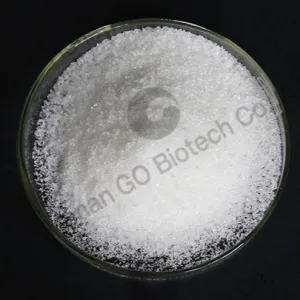
Faster dissolution reduces operator errors (fish-eyes, incomplete hydration) and stabilizes effective dosage. For granular PAMs around 80–140 mesh, well-controlled granulation can support faster wetting and more uniform solutions, especially when paired with proper make-down equipment and controlled addition.
Parameter 4: Solution Concentration, Aging Time, and Shear
Most plants run PAM solutions at 0.05–0.30% (0.5–3.0 g/L). Overly concentrated solutions can under-hydrate and cause dosing instability; excessive mixing shear can shorten polymer chains. A common practice is 30–60 minutes maturation time before dosing (temperature dependent).
Reference Targets (Use as a Starting Checklist)
| Scenario |
Primary KPI |
Typical polymer choice |
Practical test window |
| Inorganic solids clarification (high TSS) |
Settling rate; supernatant turbidity |
APAM medium–high MW |
3–20 mg/L; pH 6.5–9.5 |
| Chemical coagulation aid (with PAC/FeCl₃) |
Floc strength; filtrate clarity |
APAM or low-CD CPAM (depends on colloid) |
1–10 mg/L; optimize dose order |
| Biological sludge dewatering |
Cake moisture; filtrate NTU |
CPAM medium–high CD |
10–50 mg/L; 0.05–0.2% solution |
| Oily / surfactant-rich wastewater |
Flotation/DAF capture; stable floc |
Often CPAM + coagulant (case-specific) |
Jar test essential; watch overdosing |
4) Typical Use Cases: Strengths, Limits, and What to Watch
Industrial wastewater is not only “dirty water”—it is a moving target with seasonal raw materials, intermittent cleaning cycles, and shifting ionic strength. The observations below reflect common plant behavior during optimization.
When APAM tends to excel
- High mineral content, silica/clay fines, metal hydroxide flocs
- Clarifiers where settling speed is the bottleneck
- Coagulant-aid role after PAC/Fe salts
Limit to watch: high salinity and extreme pH can shift colloid behavior—retest when conductivity changes significantly.
When CPAM tends to excel
- Activated sludge, mixed sludge, and organic-rich suspensions
- Dewatering equipment optimization (belt press, centrifuge)
- Reducing filtrate turbidity and improving cake formation
Limit to watch: overdosing can create “greasy/slippery” floc and worsen filtrate—dose control and feedback are critical.
5) Common Operating Mistakes (and Simple Fixes)
Mistake A: Choosing only by “anionic/cationic” label
Two CPAM grades can behave dramatically differently if charge density differs by 15–20 percentage points. A better approach is a small matrix test: 3 charge levels × 2 MW levels, then narrow down.
Mistake B: Poor dissolution and inconsistent solution aging
Incomplete hydration can mimic “bad product.” Use 0.1% as a safe baseline, add polymer slowly to vortex, avoid hot water, and keep maturation time consistent (often 45 ± 15 min).
Mistake C: Wrong dosing point and excessive shear
If the dosing point is right before a high-shear pump, polymer chains can break and performance drops. Move dosing downstream of major shear points or reduce mixing intensity while maintaining dispersion.
Mistake D: Ignoring upstream chemistry (PAC, lime, Fe salts)
PAM is often a coagulant aid. Changing PAC or FeCl₃ dose can change the best PAM grade. When upstream coagulant changes by more than ±10–15%, retest the PAM dosage window.
A note on modern granular grades and stability
For projects requiring faster make-down and consistent dosing, some engineers prefer granular PAM produced with controlled drying and granulation. For example, GO references a CAS 9003-05-8 “7-series” PAM line using an airflow drying process to achieve 80–140 mesh granules, designed to support rapid dissolution, high viscosity performance, and slower degradation in practical handling—useful where uptime and operator simplicity matter.
6) Decision Support: A Simple Scoring Card for Jar Tests
When multiple stakeholders evaluate results, a scoring card prevents “looks good” decisions. Below is a lightweight template many teams adopt.
| Metric |
How to measure |
Target direction |
Suggested weight |
| Supernatant turbidity (NTU) |
Turbidimeter after fixed settling time |
Lower |
25% |
| Settling rate / clarification speed |
Interface drop over time |
Faster |
20% |
| Floc strength (shear resistance) |
Re-mix at 120–150 rpm for 10–15 s |
Less breakage |
20% |
| Sludge dewaterability (if applicable) |
CST trend / cake observation / filtrate clarity |
Better |
25% |
| Dose robustness |
Performance at ±20% dose |
Stable |
10% |
Need a PAM Grade Recommendation Based on Your Water Sample?
If you share basic water data (pH, conductivity, SS/COD, process type, and your target KPI), the selection can be narrowed quickly—often to a small test set that saves time and chemical waste.
Explore GO 7-Series Polyacrylamide (CAS 9003-05-8) for Industrial Wastewater Purification
Tip: Include your current coagulant type (PAC/FeCl₃/lime), dosing point, and dewatering equipment model for a more accurate match.
.png)





.jpg?x-oss-process=image/resize,m_fill,h_300,w_300/format,webp)
.jpg?x-oss-process=image/resize,h_300,m_lfit/format,webp)




.jpg?x-oss-process=image/resize,h_300,m_lfit/format,webp)


.jpg?x-oss-process=image/resize,m_fill,h_100,w_100/format,webp)


