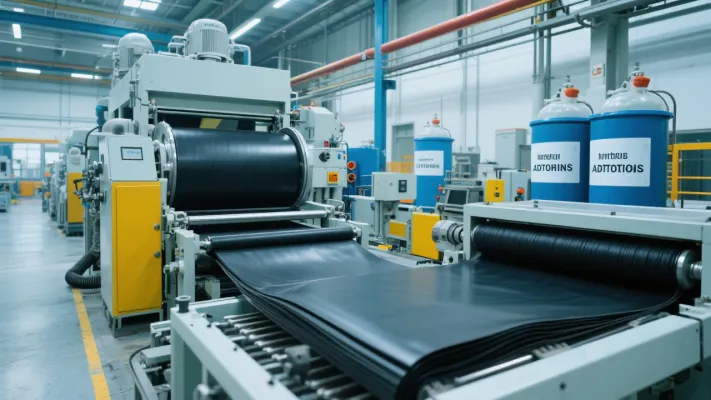
When your rubber part runs hot, oxidation stops being a lab concept and turns into cracked surfaces, rising compression set, and warranty risk. If you design or manage rubber products for continuous heat, flexing, or tropical climates, you need an antioxidant that stays active when the polymer is under real stress—not just on paper.
This is where IPPD-class antioxidants, especially N-isopropyl-N′-phenyl-p-phenylenediamine (IPPD, CAS 101-72-4), show up repeatedly in high-temperature rubber formulations. You will see it specified under GB/T 8828-2003 in many industrial supply chains for consistency and lot-to-lot control.
Quick self-check: Are you fighting any of these right now—hardening after heat aging, edge cracking under bending, or a sudden drop in tensile strength after a few weeks of hot service?
In high-temperature environments, rubber oxidation accelerates because heat increases radical formation and oxygen diffusion. Over time, you typically see a combination of:
Many teams choose antioxidants by habit—“we always use phenolic” or “amine is good enough.” But once you push beyond moderate heat (often above 120–150°C depending on polymer and compound), the selection becomes a life-cycle decision, not a line item.
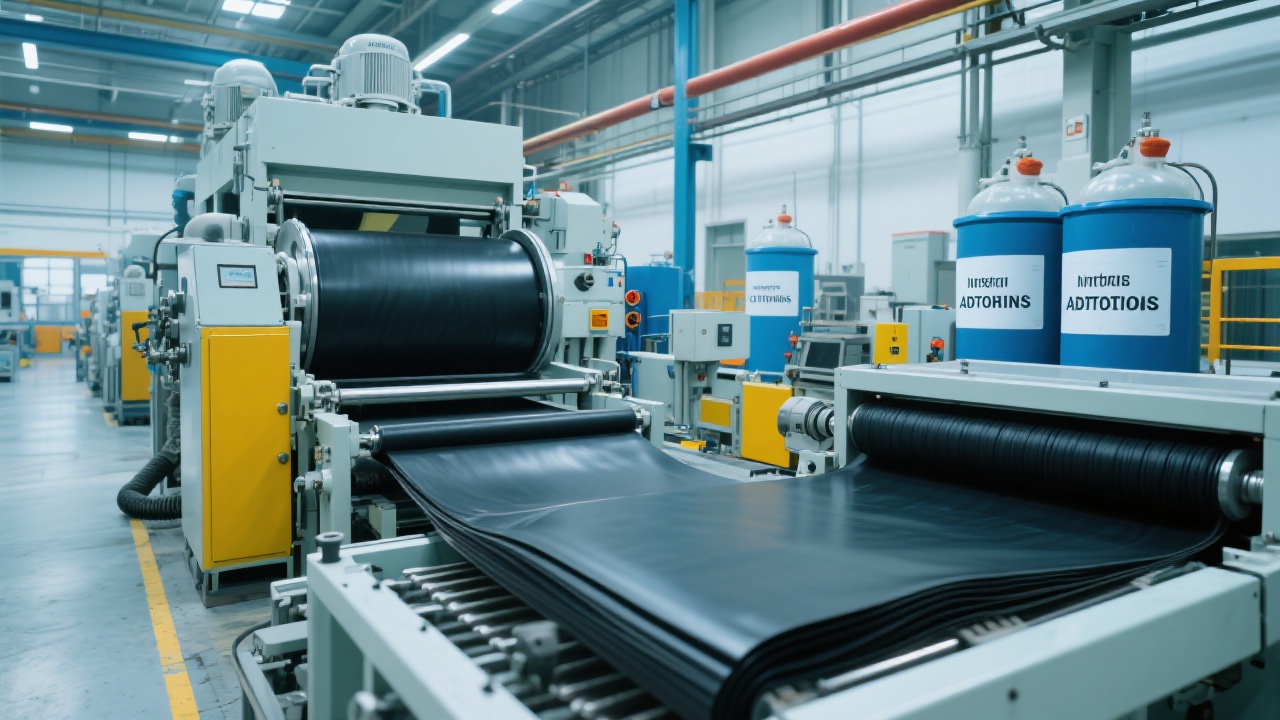
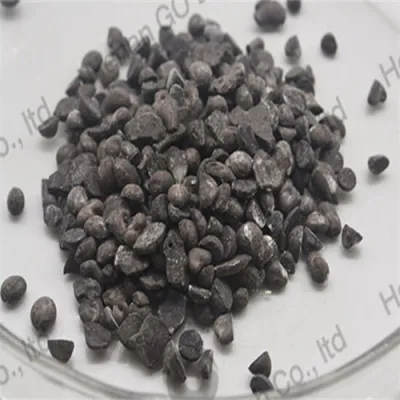
N-isopropyl-N′-phenyl-p-phenylenediamine (IPPD) is a p-phenylenediamine (PPD) amine antioxidant. In commercial form, it is typically a dark brown to purple-brown granule, oil-soluble, and insoluble in water. Its molecular formula is C15H18N2 with a relative molecular mass of 226.32.
Engineering mindset: You are not “buying an additive.” You are buying retained properties after heat aging—tensile, elongation, and crack resistance—at a target service temperature and strain profile.
Under heat, rubber generates reactive radicals. IPPD-type amines act as radical scavengers and help interrupt the oxidation chain reaction before it snowballs into measurable property loss. In practical terms, this means you typically get slower hardening, better retention of elongation, and improved resistance to flex-induced cracking compared with many general-purpose options.
If you plot your failures, what dominates: thermal hardening (compression set, loss of sealing) or dynamic cracking (flex fatigue, edge splits)? Your answer should decide whether you prioritize a heat-focused antioxidant system, a flex-crack oriented system, or a balanced package.
In rubber compounding, the real choice is rarely “amine or phenolic.” It is usually: which primary antioxidant family fits your conditions, and whether you need a secondary stabilizer to cover the gaps.
| Selection factor | IPPD (PPD amine) — typical behavior | Hindered phenolic — typical behavior |
|---|---|---|
| High-temperature retention | Often strong in hot oxidative conditions; commonly selected for demanding heat aging | Good general stabilization; may need reinforcement as temperature and stress rise |
| Dynamic flex performance | Frequently favored where flex-crack resistance matters (belts, mounts, dynamic seals) | Can help, but dynamic crack resistance may be less robust in harsh cycles |
| Processing & compatibility | Oil-soluble; integrates well in many rubber systems; evaluate staining/appearance constraints | Often chosen for low-staining needs; depends on specific phenolic type and system |
| Best-fit use case | Hot service + oxygen + motion: keep properties stable longer | Moderate heat, appearance-sensitive, or when paired in a broader stabilization package |
Reference ranges (for orientation only): In many rubber compounds tested at 125–150°C for 70–168 hours, teams often target ≥70% tensile retention and ≥60% elongation retention as a practical “safe zone.” Your exact targets should match customer specs and duty cycle.
If you want an antioxidant selection guide that survives meetings and production realities, keep it simple and measurable. Use this flow before you touch the formulation:
You’ll save time if you answer this now: What is your “end-of-life definition”? Is it leakage, hardness drift, crack length, or a tensile/elongation threshold? Your antioxidant system should be chosen to protect that specific failure mode.
Consider a typical high-stress scenario: an NBR rubber component working near hot oil and elevated under-hood temperatures, with periodic motion. The original formulation used a general antioxidant package focused on moderate heat. After field exposure, the part showed faster-than-expected hardening and edge cracking at flex points.
When the team re-framed the problem as a combined heat + oxygen + flex duty cycle, they moved to an IPPD-centered approach and tightened incoming control against a consistent standard (GB/T execution). In accelerated aging at 150°C for 96 hours, a common outcome in such transitions is improved retention: for example, tensile retention shifting from roughly ~60% to ~75%, and elongation retention from ~45% to ~60%—enough to reduce premature cracking risk in service.
What makes this “real”: The biggest win is not a lab number—it’s predictable performance. Standardized antioxidant quality plus a duty-cycle-based selection logic reduces rework, complaint cycles, and the temptation to “add more” of the wrong chemistry.
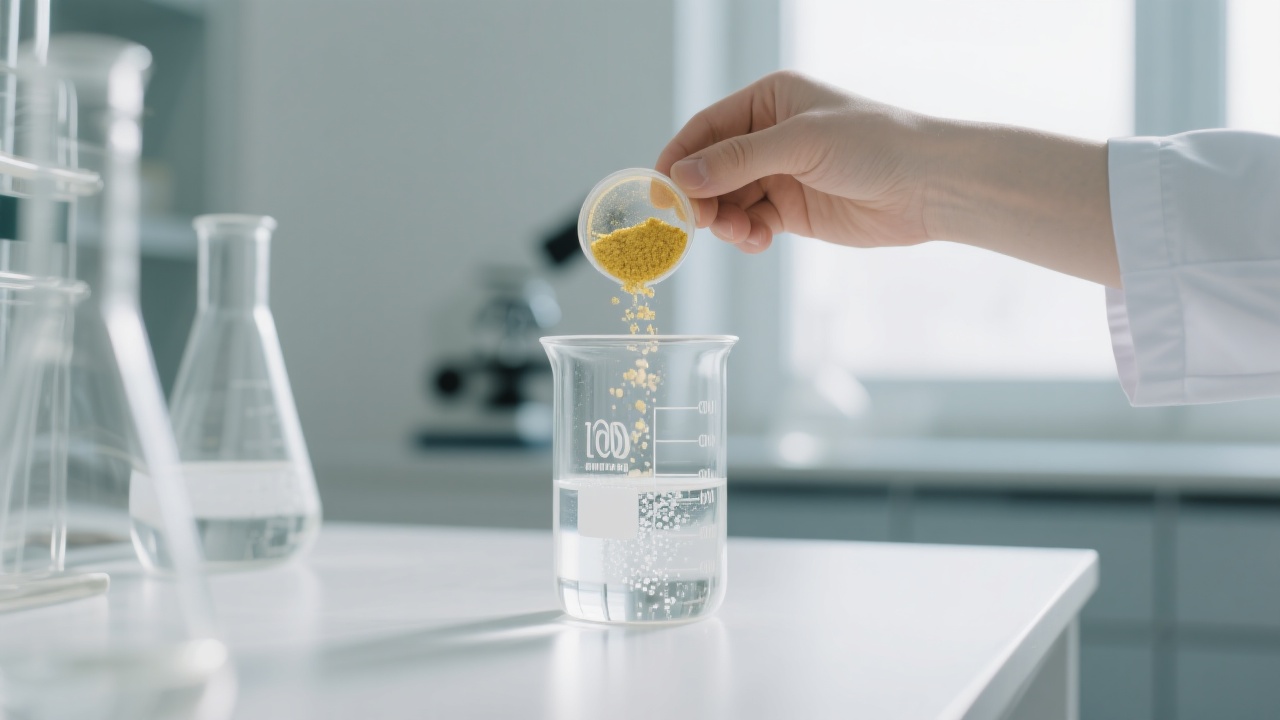
You will most often consider IPPD-class antioxidants when you need reliable heat-aging defense in rubbers such as natural rubber (NR) and nitrile rubber (NBR), especially when parts operate in:
If your product is appearance-critical or extremely sensitive to staining, you should flag that constraint early in your selection meeting. Heat protection is vital, but so is meeting your customer’s visual and specification boundaries.
Your rubber products may be losing performance long before visible cracks appear. If you want a duty-cycle-based recommendation for N-isopropyl-N′-phenyl-p-phenylenediamine (IPPD, CAS 101-72-4) aligned with GB/T 8828-2003 execution and your target polymer system, the team at GO can help you map the right antioxidant strategy.
Your rubber parts facing thermal aging? Explore how IPPD antioxidant solutions can be matched to your conditionsTip for faster evaluation: prepare your current compound (polymer type, cure system, target temperature, motion mode, and failure definition).
If your customer raises the continuous temperature by 10°C, do you already know which property fails first—compression set, tensile retention, or flex cracking—and which antioxidant family you would switch to without increasing your scrap rate?

 189
|
189
|
 solid polymers
bulk polymers
polymer applications
solid polymers
bulk polymers
polymer applications
 149
|
wet strength paper additives
paper industry solutions
149
|
wet strength paper additives
paper industry solutions
 394
|
N-Cyclohexyl-2-benzothiazole sulfonamide
chemical product
industrial application
sulfonamide compound
performance chemicals
394
|
N-Cyclohexyl-2-benzothiazole sulfonamide
chemical product
industrial application
sulfonamide compound
performance chemicals
 429
|
PAM wastewater treatment
polyacrylamide
industrial wastewater
water treatment solutions
429
|
PAM wastewater treatment
polyacrylamide
industrial wastewater
water treatment solutions
 482
|
flocculants
water treatment
chemicals
industrial applications
environmental solutions
482
|
flocculants
water treatment
chemicals
industrial applications
environmental solutions

.png)




.jpg?x-oss-process=image/resize,m_fill,h_100,w_100/format,webp)
.jpg?x-oss-process=image/resize,m_fill,h_100,w_100/format,webp)