https://shmuker.oss-accelerate.aliyuncs.com/data/oss/65a77f7ece75e713c015cab0/67bbd0247d3d2a63b283e55c/20250709181308/LOGO_(3).png

NBR Rubber Antioxidant Selection Guide: Choosing IPPD for High-Temperature Aging and Flex-Fatigue Resistance
2026/03/20
GO
Tutorial Guide
This guide explains how to select rubber antioxidants based on the material characteristics of nitrile rubber (NBR) and real-service conditions. It outlines how operating factors such as high temperature, thermal-oxidative aging, flex-fatigue, and environmental exposure drive different antioxidant performance requirements. With a focus on IPPD (N-isopropyl-N'-phenyl-p-phenylenediamine) under GB/T 8828-2003, the article compares IPPD-type amine antioxidants with phenolic and other systems in terms of heat-aging protection, dynamic fatigue durability, stability under harsh conditions, and practical formulation compatibility. It also provides visual decision tools (comparison tables and a selection flowchart) and an engineering-style case study to support evidence-based selection that balances durability targets and formulation efficiency for long-life NBR products.
https://shmuker.oss-accelerate.aliyuncs.com/data/oss/20250715/73ee3b1afc966129da3ec06c40480292/f5913f57-17a9-42c9-bbb5-f7a390976b0c.jpeg

Selecting Rubber Antioxidants for NBR: A Practical Guide to High-Temperature & Flex-Fatigue Durability

In nitrile butadiene rubber (NBR) parts—seals, hoses, oil-resistant gaskets, and dynamic components—oxidation rarely appears as a single failure mode. It usually arrives as a chain reaction: heat accelerates oxygen uptake, mechanical flexing opens micro-cracks, and oil/chemical exposure alters diffusion pathways. A well-chosen antioxidant package interrupts this chain early, extending service life while keeping formulation cost predictable.

This guide focuses on selection logic aligned with GB/T 8828-2003 practice for p-phenylenediamine (PPD) antioxidants, with emphasis on IPPD (N-isopropyl-N'-phenyl-p-phenylenediamine) performance under thermal aging and flex/fatigue stress.

1) Why NBR Needs “Condition-Matched” Antioxidants (Not Just “Strong Antioxidants”)

NBR’s oil resistance comes from the polar nitrile group, but its long-term durability still depends on how effectively the formulation suppresses oxidation-driven chain scission and stiffening. In real applications, engineers typically face a combined stress profile:

Material-side factors (NBR)

  • ACN content influences heat build-up, polarity, and plasticizer compatibility.
  • Dynamic loading can accelerate crack initiation once the network embrittles.
  • Compound design (carbon black, plasticizer, sulfur/peroxide systems) changes oxidation kinetics.

Service-side factors (use conditions)

  • High temperature (often 100–140°C continuous in automotive/fluid systems) speeds oxidation.
  • Flexing & bending drives ozone/oxygen cracking at strain-concentrated zones.
  • Oils/fuels can swell NBR, raising oxygen diffusion and antioxidant migration risk.

Selection therefore needs a structured view: what must be protected (heat-aging retention, crack resistance, elasticity) and what can be tolerated (staining, migration, regulatory constraints, processing window).

Schematic of Aging Risks and Antioxidant Requirement Key Points for Nitrile Rubber under High-Temperature and Dynamic Buckling Conditions

2) Antioxidant Families for Rubber: What They Actually Do in NBR

Rubber antioxidants are typically combined, not used alone. For NBR, the most common practical framework is: amine antioxidants (PPDs) for severe conditions, plus phenolic antioxidants for clean processing and baseline thermal stability.

Type Typical Role in NBR Strengths Trade-offs / Notes Best-fit Use Cases
PPD amines (e.g., IPPD) Primary defense against oxidative cracking under heat + flex High efficiency at severe thermo-oxidative stress; strong crack/flex protection Can stain/discolor; potential migration depending on plasticizer & oil exposure Dynamic seals, hoses, vibration parts, fatigue-prone NBR components
Hindered phenols Baseline thermal oxidation inhibition; supports processing stability Low staining; good processing compatibility; supports color-sensitive products May be less effective than PPDs in severe flex-fatigue environments Static seals, cleaner appearance requirements, moderate temperature parts
Phosphites / thioesters (as synergists) Decompose hydroperoxides; boost phenolic systems Synergy improves heat-aging retention; can reduce overall dosage needs Not always sufficient alone for heavy flex cracking High-heat NBR formulations needing balanced aging resistance & cleanliness

Reference performance expectations (industry-typical): in accelerated hot-air aging of NBR (e.g., 100°C for 70 hours), optimized antioxidant systems often target ≥70–85% tensile retention and controlled hardness increase, depending on compound and cure system.

3) Why IPPD Is Often the “Workhorse” for Heat + Flex in NBR

IPPD (a PPD-type amine antioxidant) is widely chosen when NBR must retain elasticity under both thermal aging and repeated deformation. In practical engineering terms, IPPD is valued for maintaining crack resistance when the compound is exposed to oxygen at elevated temperature while undergoing cyclic strain.

Performance advantages (typical decision drivers)

  • Thermo-oxidative stability: helps slow chain scission at sustained heat, supporting tensile and elongation retention.
  • Flex-fatigue support: reduces crack growth in dynamic conditions where micro-damage accumulates.
  • Robustness window: tends to remain effective across varying filler levels and common NBR plasticizer choices.

When to consider alternatives or blends

  • If non-staining is mandatory, phenolic systems may dominate.
  • If migration risk is high (oil swell), consider higher MW partners or package design.
  • For long-life programs, PPD + phenolic synergy is common.

Note for compliance-minded buyers: confirm the IPPD grade, assay, ash, and relevant handling requirements under applicable safety documentation, and verify conformity to internal specs aligned with GB/T 8828-2003 test practices.

Selection Comparison Chart of IPPD vs. Antioxidant Systems such as Hindered Phenols and Thioesters in Thermal-Oxidative Aging and Dynamic Fatigue Scenarios

4) A Step-by-Step Selection Workflow (Engineers Can Apply in 30 Minutes)

To avoid over-design and under-protection, selection can be treated as a short decision workflow with clear gates. This is especially useful for procurement and R&D alignment across multiple NBR SKUs.

Selection flow (text version for documentation)

  1. Define stress profile: continuous temperature band (e.g., 90–120°C), peak temperature, and whether load is static or dynamic.
  2. Confirm exposure media: engine oil, ATF, fuel blends, solvents—note swell tendency and extraction risk.
  3. Set property retention targets: tensile/elongation retention, hardness change limit, compression set, crack resistance.
  4. Choose antioxidant family: PPD-dominant for heat + flex; phenolic-dominant for clean/static; add synergists if needed.
  5. Check processing/cure compatibility: mixing temperature, scorch safety, and cure system interactions.
  6. Validate with accelerated aging: hot-air aging (e.g., 100°C/70h), plus flex-fatigue or dynamic cracking tests as relevant.
  7. Lock spec & QC: set incoming inspection items (assay, melting range, ash, insolubles) and batch-to-batch controls.

Practical dosage guidance (non-prescriptive)

In many NBR compounds, amine antioxidants (PPD family) are often evaluated in the range of 0.5–2.0 phr, while phenolic antioxidants are often screened around 0.2–1.0 phr. Final dosage should be decided by aging and migration results rather than by “rule-of-thumb phr” alone.

Nitrile Rubber Antioxidant Selection Flowchart: From Operating Condition Identification to Blend Verification and Service Life Cost Evaluation

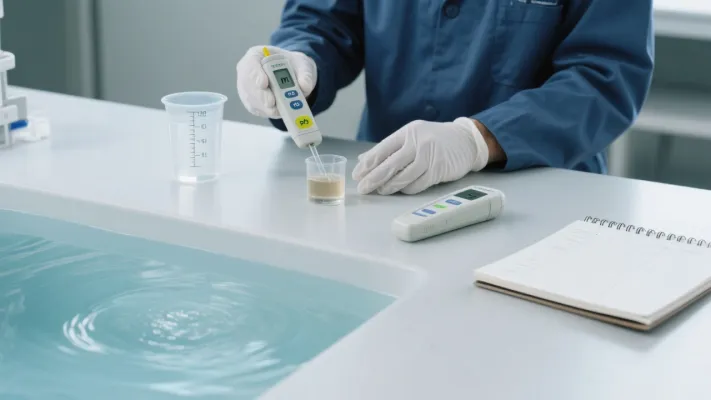
5) Case Snapshot: Upgrading an NBR Dynamic Seal for Hot Oil + Repeated Bending

A typical scenario involves an NBR dynamic seal used near a heat source with oil splash and continuous bending. Field complaints often begin as early hardening and edge cracking, followed by leakage. A structured antioxidant selection approach usually focuses on improving both heat-aging retention and fatigue crack resistance.

Initial condition (common pattern)

  • Continuous service temperature: 110–125°C, peaks to 140°C
  • Medium: engine oil with periodic splash
  • Failure signal: hardness increase + micro-cracks at bend zone
Optimization logic (what usually changes)

  • Shift to an IPPD-centered antioxidant strategy for dynamic crack resistance.
  • Pair with a phenolic co-antioxidant to balance thermal aging and processing stability.
  • Re-test with hot-air aging + flex-fatigue to confirm the real limiting factor.

Observed engineering outcome (reference range)

In comparable NBR programs, teams often report that a PPD-forward package (validated by aging and dynamic testing) can improve:

  • Tensile retention after hot-air aging by ~10–25% versus baseline phenolic-only approaches (compound-dependent).
  • Crack onset time in flex-fatigue screening by ~1.3–2.0× under comparable test severity.
  • Field stability through reduced early embrittlement, lowering leakage risk in the first service interval.

Results vary with ACN level, filler, plasticizer, cure system, and oil swell; validation testing remains essential.

6) What Buyers Should Ask Before Locking an IPPD Antioxidant into a Spec

For procurement and technical decision-makers, due diligence typically focuses on consistency, processing behavior, and performance repeatability.

Quality & documentation

  • Assay, melting range, ash, insolubles (COA alignment)
  • Batch consistency & traceability
  • SDS and storage stability guidance

Application fit

  • Staining/discoloration tolerance of the end product
  • Oil/fuel exposure and extraction risk
  • Dynamic cracking requirement (bending, vibration, cyclic compression)

Need a Faster, Safer Antioxidant Decision for NBR?

GO supports engineers and sourcing teams with application-matched antioxidant recommendations for NBR—especially when heat-aging and flex-fatigue are both critical. For best results, teams typically share the polymer grade, cure system, target temperature band, and media exposure so the antioxidant package can be validated efficiently.

Request a Customized IPPD Antioxidant Selection Support for NBR
Typical inputs: service temperature range, dynamic/static loading, oil/fuel media, property retention targets, and current phr window.
Recommended Products
https://shmuker.oss-accelerate.aliyuncs.com/data/oss/65a77f7ece75e713c015cab0/65aa4318c2e9735675ca40c6/1705910974053_incense-1.png
Please contact us
Min.order:1.0 ton
https://shmuker.oss-accelerate.aliyuncs.com/data/oss/common/20240516101641/20240516/c4ebb7096331ad317849bdca231b1f28.jpg
Please contact us
Min.order:1.0 ton
https://shmuker.oss-accelerate.aliyuncs.com/data/oss/65a77f7ece75e713c015cab0/66455f8ded182f1872690593/20240516112250/Oil%20Gas.png
Please contact us
Min.order:1.0 ton
https://shmuker.oss-accelerate.aliyuncs.com/data/oss/65a77f7ece75e713c015cab0/66455f8ded182f1872690593/20240530154943/抗降解橡胶MB(MBI).jpg
Please contact us
Min.order:1.0 ton
https://shmuker.oss-accelerate.aliyuncs.com/data/oss/65a77f7ece75e713c015cab0/65aa4318c2e9735675ca40c6/6PPD-1.jpg
Please contact us
Min.order:1.0 ton
Related Reading
https://shmuker.oss-accelerate.aliyuncs.com/data/oss/65a77f7ece75e713c015cab0/66455f8ded182f1872690593/20240530154943/抗降解橡胶MB(MBI).jpg
2025-03-02
https://shmuker.oss-accelerate.aliyuncs.com/tmp/temporary/60ec5bd7f8d5a86c84ef79f2/60ec5bdcf8d5a86c84ef7a9a/20240305161110/eye.png 291 | https://shmuker.oss-accelerate.aliyuncs.com/tmp/temporary/60ec5bd7f8d5a86c84ef79f2/60ec5bdcf8d5a86c84ef7a9a/20240305160636/lable.png rubber degradation inhibitors customer success story case studies
https://shmuker.oss-accelerate.aliyuncs.com/data/oss/20250307/b9c896df02d04262f9a43662de990656/temp_sub_image_3_1741278071602.jpg
2025-03-08
https://shmuker.oss-accelerate.aliyuncs.com/tmp/temporary/60ec5bd7f8d5a86c84ef79f2/60ec5bdcf8d5a86c84ef7a9a/20240305161110/eye.png 189 | https://shmuker.oss-accelerate.aliyuncs.com/tmp/temporary/60ec5bd7f8d5a86c84ef79f2/60ec5bdcf8d5a86c84ef7a9a/20240305160636/lable.png solid polymers bulk polymers polymer applications
https://shmuker.oss-accelerate.aliyuncs.com/data/oss/20250305/3f259d8142ab7aebdbcaceef6a87afd8/temp_sub_image_2_1741105034824.jpg
2025-03-06
https://shmuker.oss-accelerate.aliyuncs.com/tmp/temporary/60ec5bd7f8d5a86c84ef79f2/60ec5bdcf8d5a86c84ef7a9a/20240305161110/eye.png 138 | https://shmuker.oss-accelerate.aliyuncs.com/tmp/temporary/60ec5bd7f8d5a86c84ef79f2/60ec5bdcf8d5a86c84ef7a9a/20240305160636/lable.png polyacrylamide industrial wastewater treatment water purification chemical flocculants
https://shmuker.oss-accelerate.aliyuncs.com/data/oss/20250228/0d4709e18f8ca3a376dfeee700d48710/temp_sub_image_2_1740673304398.jpg
2025-03-01
https://shmuker.oss-accelerate.aliyuncs.com/tmp/temporary/60ec5bd7f8d5a86c84ef79f2/60ec5bdcf8d5a86c84ef7a9a/20240305161110/eye.png 75 | https://shmuker.oss-accelerate.aliyuncs.com/tmp/temporary/60ec5bd7f8d5a86c84ef79f2/60ec5bdcf8d5a86c84ef7a9a/20240305160636/lable.png TBC plasticizer market application future outlook plasticizer industry chemical additives
https://shmuker.oss-accelerate.aliyuncs.com/data/oss/common/20240520114128/20240520/41b343768197d455d771a6991b493a14.jpg
2025-02-21
https://shmuker.oss-accelerate.aliyuncs.com/tmp/temporary/60ec5bd7f8d5a86c84ef79f2/60ec5bdcf8d5a86c84ef7a9a/20240305161110/eye.png 498 | https://shmuker.oss-accelerate.aliyuncs.com/tmp/temporary/60ec5bd7f8d5a86c84ef79f2/60ec5bdcf8d5a86c84ef7a9a/20240305160636/lable.png dispersant polyacrylamide paper manufacturing
Hot Products
Popular articles
Recommended Reading
https://shmuker.oss-accelerate.aliyuncs.com/tmp/temporary/60ec5bd7f8d5a86c84ef79f2/60ec5bdcf8d5a86c84ef7a9a/thumb-prev.png
TOP
Contact Us