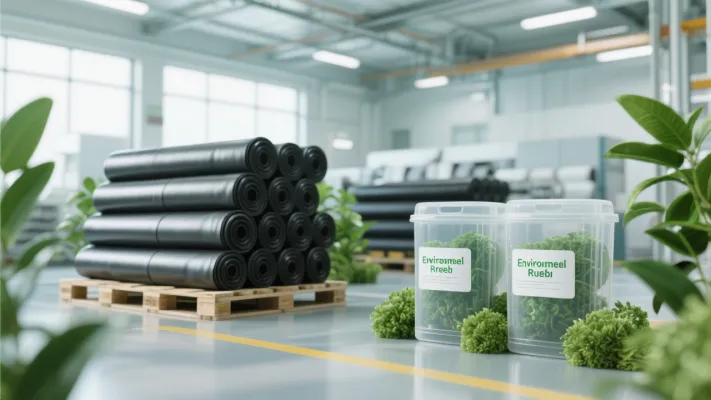
If you’re responsible for industrial or municipal wastewater performance, you already know the uncomfortable truth: the “wrong” polyacrylamide (PAM) model doesn’t just reduce flocculation—it inflates sludge handling costs, destabilizes operation, and forces your team into endless trial-and-error. This guide helps you select anionic, cationic, nonionic, or amphoteric PAM based on your actual water characteristics, then confirm the choice with a compact jar-test workflow using indicators like Zeta potential, turbidity removal, and filterability.
Quick self-check before you read on: In your current system, is the main pain high turbidity after settling, slow dewatering / wet cake, or unstable performance when salinity or pH shifts? Your answer typically points to a different PAM family.
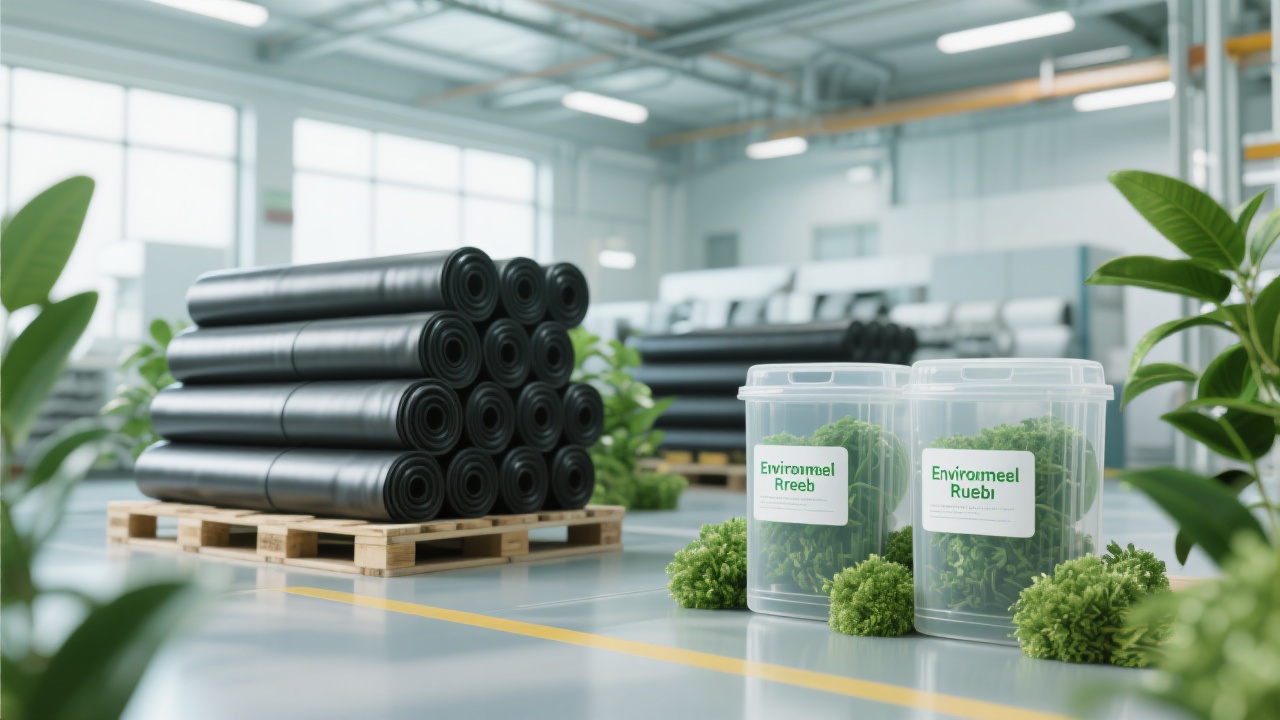
In B2B water treatment, you don’t “choose a PAM.” You match a polymer’s charge type + charge density + molecular weight to the suspension you’re trying to destabilize. The most practical way is to map your wastewater into four dimensions:
Most colloids in wastewater are negatively charged. If your Zeta potential is strongly negative (often -15 to -35 mV), you typically need cationic PAM or a coagulant + PAM combination to neutralize charge before bridging.
Organic-rich sludge (paper, food, municipal biosolids) often responds better to cationic grades for stronger adsorption and dewatering. Mineral-heavy streams (sand, tailings) commonly fit anionic grades for bridging and settling.
High salinity and extreme pH can suppress electrostatic interactions (“charge screening”). If you operate in brackish/high-TDS conditions (common in oilfield produced water), nonionic PAM can be more stable, while amphoteric options may offer robustness when water chemistry swings.
“Best floc” is not a single visual. Clarification prioritizes low turbidity; thickening prioritizes settling rate; dewatering prioritizes capillary suction time (CST) / filterability and cake solids. Your KPI should decide your lab test endpoints.
Evidence-based note (industry practice): Many municipal and industrial operators aim for a post-treatment Zeta potential closer to near-neutral (around -5 to +5 mV) during optimization—because charge neutralization plus polymer bridging often yields more compact flocs and better solid-liquid separation. Always validate with jar tests, because “ideal” Zeta varies by solids composition.
Use this as a starting map—then let your small-scale tests confirm. If you’re in procurement or engineering, this is also the fastest way to align internal stakeholders before sampling and trials.
| PAM family | Typical fit (water traits) | Common industries | Watch-outs |
|---|---|---|---|
| Anionic PAM | Negatively charged particles, mineral solids, good for bridging/settling with coagulant support | Mining & metallurgy (tailings), sand washing, some process waters | Can underperform on organic sludge dewatering; dosage window can be narrow when solids vary |
| Cationic PAM | Organic-rich sludge, strong negative Zeta, need charge neutralization + adsorption for dewatering | Municipal biosolids, paper mills, food & beverage, textile printing | Overdosing may cause restabilization or sticky flocs; ensure safe handling and correct make-down |
| Nonionic PAM | High salinity/TDS, strong acid/alkali conditions, low charge systems where stability matters | Oilfield produced water (pre-treatment), certain chemical effluents | May need coagulant pairing for turbidity targets; performance depends heavily on MW |
| Amphoteric PAM | Variable water chemistry, mixed-charge solids, need resilience across operating swings | Complex industrial parks, mixed influent scenarios | Not always the cheapest; validate ROI via reduced dosing/variance |
Interactive question: When your influent changes (seasonality, production shifts), do you see failure mainly as cloudy supernatant or as wet sludge cake? Cloudiness often points to charge/coagulation mismatch; wet cake often points to charge density or molecular weight mismatch.
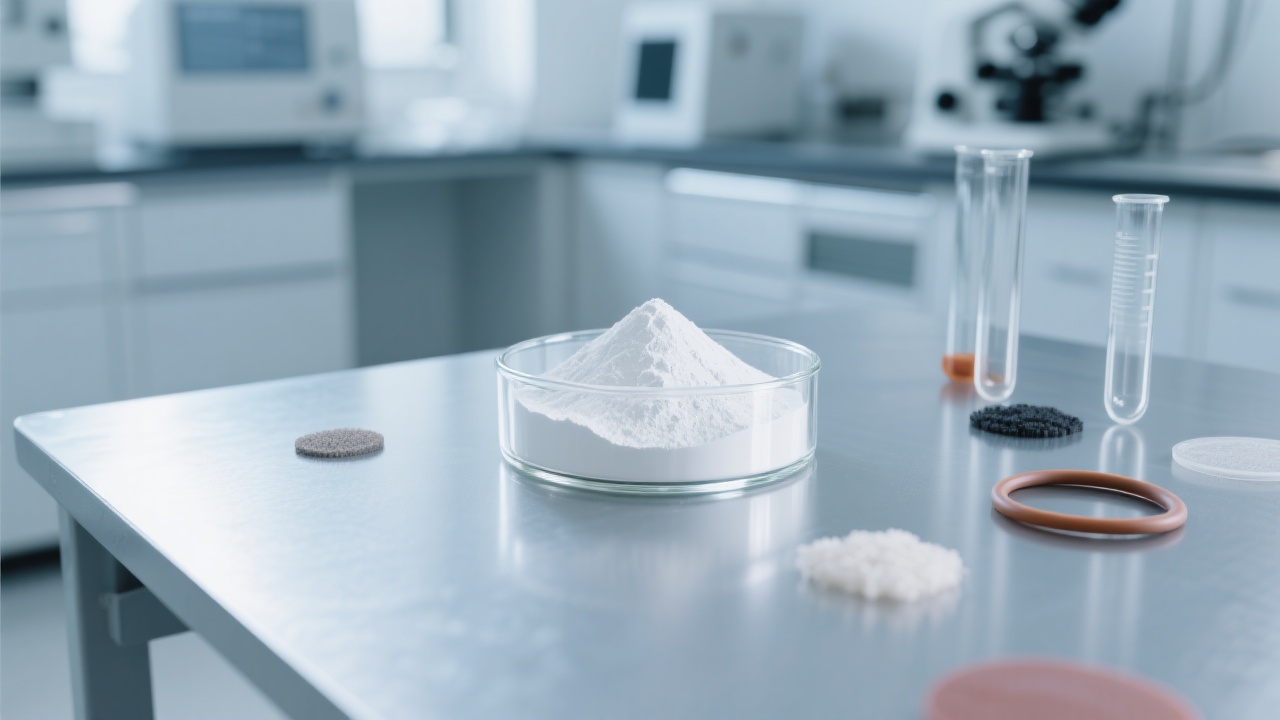
A reliable PAM selection should be reproducible and defensible. Here’s a compact method many plants use to reduce trial costs and speed up commissioning. If you document it well, it also strengthens supplier evaluation and internal approvals.
What “good” often looks like (reference ranges you can adjust): In clarification, many plants target ≥80–95% turbidity reduction depending on baseline; in sludge conditioning, a practical target is a 20–40% CST reduction compared with current polymer—if your centrifuge/belt press is the bottleneck. Use your own KPIs and compliance limits.
A paper mill approached GO with a familiar complaint: the settling tank looked “okay,” yet the sludge cake stayed wet and the press throughput was inconsistent. Their polymer program had been adjusted repeatedly, but decisions were mainly visual—without measurable endpoints.
The point isn’t that one “magic” cationic grade solved everything. The point is that your team can stop guessing once you anchor selection to measurable indicators—and keep those indicators as a baseline for future seasons and raw material shifts.
Big flocs can still trap water and fail dewatering. If your objective is sludge conditioning, track CST, filtration time, or cake solids—don’t rely on appearance.
Many PAM issues are preparation issues. Too high concentration, too much shear, or too short aging often reduces effective chain length and bridging power.
If conductivity varies widely, your “best” charge-based polymer may drift. In those systems, you may need nonionic/amphoteric options or tighter upstream control.
Over time, your fastest selection work comes from your own history: water panels, Zeta trends, best-performing grades, seasonal dosage windows. Treat this like an engineering asset, not a spreadsheet afterthought.
Interactive question: If you had to pick only one number to track weekly—turbidity, Zeta, or CST—which one would most directly reflect your biggest cost driver?
You can shortlist, but you shouldn’t finalize. Even within one industry, Zeta potential, fines content, and salinity vary by site. A short jar-test matrix usually prevents weeks of full-scale trial costs.
Changes in pH, conductivity, coagulant dose, temperature, or influent solids shift the charge environment and collision dynamics. If performance “suddenly drops,” test Zeta + turbidity/CST side by side before switching product.
Standardize your make-down method, define a single primary KPI (clarity or dewatering), then run a structured screening of charge density and molecular weight. Document dosage windows instead of chasing one “best” point.
Not always, but it helps when your system is inconsistent or when you’re choosing between cationic levels. If you can’t measure Zeta, you can still select via turbidity removal + settling rate + CST, but expect more iterations.
Common signs include milky supernatant (restabilization), slimy flocs, higher filtrate turbidity, or worse CST despite “bigger” flocs. Confirm with a dose-response curve in jar tests (±30–50%).
If you share your baseline water panel (pH, conductivity/TDS, turbidity, SS/MLSS, COD), you can usually narrow candidates quickly—then validate with a short test plan. Download the checklist your team can use in meetings and on-site trials.
Tip for engineering teams: keep your jar-test photos + KPI table as a “local water database”—it makes future PAM selection faster and more defensible.

 242
|
242
|
 oilfield production
charge-tunable blocking agents
profit analysis
enhanced oil recovery
chemical methods
oilfield production
charge-tunable blocking agents
profit analysis
enhanced oil recovery
chemical methods
.jpg?x-oss-process=image/resize,h_300,m_lfit/format,webp) 71
|
SBR rubber
CBS accelerator
burn resistance
production efficiency
71
|
SBR rubber
CBS accelerator
burn resistance
production efficiency
 500
|
oilfield operations
polymer optimization
plugging techniques
enhanced oil recovery
500
|
oilfield operations
polymer optimization
plugging techniques
enhanced oil recovery
 466
|
rubber penetration machine
DBD technology
international market trends
industrial applications
market prospects
466
|
rubber penetration machine
DBD technology
international market trends
industrial applications
market prospects
 454
|
compound plasticizer
environmentally friendly materials
DOP replacement
novel plasticizers
plastic product optimization
454
|
compound plasticizer
environmentally friendly materials
DOP replacement
novel plasticizers
plastic product optimization


.png)



-1.jpg?x-oss-process=image/resize,m_fill,h_300,w_300/format,webp)


.jpg?x-oss-process=image/resize,m_fill,h_100,w_100/format,webp)

.jpg?x-oss-process=image/resize,m_fill,h_100,w_100/format,webp)