.png)


Sludge Dewatering
Common for belt presses, centrifuges, and filter presses. PAM improves cake solids and filtrate clarity. Reference ranges often fall around 1–10 g/kg dry solids depending on sludge type and polymer grade.
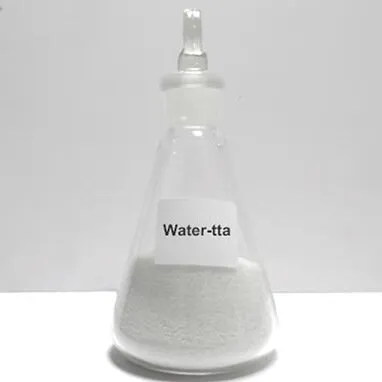
Polyacrylamide (PAM) and Poly Aluminum Chloride (PAC) are two of the most widely used chemicals in coagulation–flocculation systems, yet they solve different problems. In simple terms: PAC “starts the cleanup” by destabilizing suspended particles, while PAM “finishes the job” by building strong, settleable (or filterable) flocs.
SEO note for operators: If you search “PAM vs PAC” or “coagulant vs flocculant,” most confusion comes from dosing order and mechanism. This guide clarifies both with practical numbers you can use as a starting point (then adjust via jar testing).
| Feature | Polyacrylamide (PAM) | Poly Aluminum Chloride (PAC) |
|---|---|---|
| Category | Flocculant (polymer) | Coagulant (inorganic aluminum salt) |
| Main mechanism | Polymer bridging + netting; strengthens flocs | Charge neutralization + sweep coagulation; forms microflocs |
| Typical dosing stage | After coagulation (secondary addition) | Initial stage (rapid mix / flash mix) |
| Typical dosage (reference) | 0.1–3 mg/L (wastewater often 0.5–2 mg/L) | 10–80 mg/L (high turbidity water may reach 100 mg/L) |
| Best for | Sedimentation boosting, filtration aid, sludge dewatering | Turbidity reduction, colloid destabilization, phosphate co-precipitation support |
| Material type | Organic polymer (anionic / cationic / nonionic) | Inorganic polymerized aluminum (e.g., Al2(OH)nCl6−n) |
| Common applications | Mining tailings, industrial separation, paper/textile wastewater, sludge dewatering | Drinking water clarification, municipal wastewater, high-turbidity surface water, industrial pretreatment |
Practical takeaway: If your water is colloid-heavy (turbidity, fine clay, emulsified solids), PAC is often the “key” that unlocks destabilization. If your clarifier forms fluffy, fragile flocs or settles slowly, PAM is often the “muscle” that makes flocs dense and separable.
Most suspended solids and colloids in water carry surface charges that keep them dispersed. PAC introduces polymerized aluminum species that neutralize particle charges and reduce electrostatic repulsion. In many real systems, PAC also promotes “sweep coagulation,” where aluminum hydroxide precipitates form a matrix that captures fine particles as it settles.
Where PAC shines: high turbidity surface water, seasonal algae/turbidity spikes, industrial influent with variable suspended solids, and pretreatment before filtration membranes. A common operational window is pH 6.0–8.0 (site-specific), and performance typically improves with good rapid mixing (e.g., 20–60 seconds of high-intensity mixing, followed by gentle flocculation).
PAM is a high-molecular-weight polymer. Instead of “neutralizing” everything, it primarily links particles together through a mechanism commonly described as bridging. The polymer chain adsorbs onto one particle surface while extending into the water to connect with others—creating larger, heavier flocs that settle or filter much faster.
Why dosage is usually low: PAM is highly efficient per unit mass. In many systems, going from 0.3 mg/L to 1.0 mg/L can dramatically change floc strength and settling rate. However, overdosing may cause restabilization or “slimy” pin flocs—so jar tests and careful ramp-up are essential.
Common for belt presses, centrifuges, and filter presses. PAM improves cake solids and filtrate clarity. Reference ranges often fall around 1–10 g/kg dry solids depending on sludge type and polymer grade.
Speeds up tailings settling and improves thickener underflow clarity. Especially useful for fine clays where gravity settling alone is slow.
Helps with paper, textiles, stone processing, and food processing wastewater where you want tougher flocs for fast clarification or filtration.
If you already coagulate but still see slow settling, high effluent turbidity, or fragile flocs, PAM is often the missing step.
Operationally, PAC often delivers more stable performance than traditional alum under colder temperatures and fluctuating raw water conditions, but the exact advantage depends on water chemistry.
Yes—and in many treatment trains, that’s the most reliable approach. The typical sequence is: PAC first (rapid mix) to destabilize particles → PAM second (gentle mix) to build larger flocs.
Reference outcome: many plants see 30–70% faster settling and lower final turbidity when PAM is tuned correctly after PAC (actual results vary by water matrix).
Start with PAC. High turbidity often means abundant colloids and fine mineral particles that need charge neutralization before they can form a settleable structure.
Add or optimize PAM. You’re likely short on bridging strength, or your flocs are being broken by mixing/shear.
Consider cationic or anionic PAM depending on sludge characteristics. Dewatering performance is often polymer-driven more than coagulant-driven.
Many systems reduce total chemical cost by using PAC to set the chemistry and a small PAM “trim dose” to polish clarity and speed separation.
PAC is a coagulant used to destabilize suspended matter (charge neutralization). PAM is a flocculant used to connect destabilized particles into larger, stronger flocs (bridging).
Neither is universally better. PAC is typically essential at the front end when particles are stable; PAM is best for boosting settling, filtration, and dewatering. Many plants use both to get stable clarity and throughput.
Usually no. PAM does not reliably neutralize colloidal charge; it mainly strengthens flocs after destabilization. Skipping PAC can leave you with “pretty flocs” that don’t clarify the water.
Yes. A common reference is 0.1–3 mg/L for PAM versus 10–80 mg/L for PAC, depending on your raw water and target clarity.
When selected correctly and applied within appropriate dosing and regulatory guidelines, they are widely used in municipal and industrial water treatment. Always follow local standards and verify performance with routine monitoring (turbidity, residuals, pH, sludge quality).
If you’re targeting faster settling, clearer effluent, or better sludge dewatering, the grade (ionic type, molecular weight, basicity) matters as much as the dose. Get a recommendation based on your raw water and process goals.
.jpg?x-oss-process=image/resize,h_300,m_lfit/format,webp)
 291
|
291
|
 rubber degradation inhibitors
customer success story
case studies
rubber degradation inhibitors
customer success story
case studies
 84
|
Rubber Accelerators
CZ vs TS
Industry Insights
Rubber Processing
Chemical Additives
84
|
Rubber Accelerators
CZ vs TS
Industry Insights
Rubber Processing
Chemical Additives
 194
|
PAM market trends
US PAM analysis
identity access management
Privileged Access Management
194
|
PAM market trends
US PAM analysis
identity access management
Privileged Access Management
 67
|
Industrial PAC
Economic Benefits
Cost Efficiency
Manufacturing Optimization
Investment Analysis
67
|
Industrial PAC
Economic Benefits
Cost Efficiency
Manufacturing Optimization
Investment Analysis
 394
|
N-Cyclohexyl-2-benzothiazole sulfonamide
chemical product
industrial application
sulfonamide compound
performance chemicals
394
|
N-Cyclohexyl-2-benzothiazole sulfonamide
chemical product
industrial application
sulfonamide compound
performance chemicals




.jpg?x-oss-process=image/resize,m_fill,h_100,w_100/format,webp)


.jpg?x-oss-process=image/resize,m_fill,h_100,w_100/format,webp)


