Polyacrylamide (PAM) is a water-soluble synthetic polymer widely used as a flocculant in water and wastewater treatment. In plain terms, PAM helps tiny suspended particles (silt, organic fines, colloids) stick together into larger “flocs,” making them easier to remove by sedimentation, dissolved air flotation (DAF), filtration, or sludge dewatering.
If you’re optimizing treatment performance—clearer effluent, faster settling, drier sludge cake, or reduced polymer consumption—understanding which PAM type to select and how to dose it correctly can make a measurable difference.
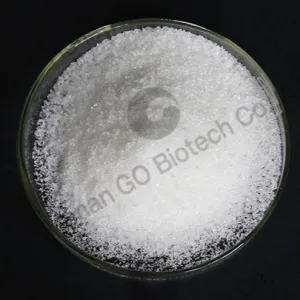
PAM (polyacrylamide) is typically supplied as a white powder or granular material that dissolves in water to form a viscous solution. In water treatment plants, it is primarily applied in the flocculation stage—often after coagulation—where it strengthens flocs and improves solid-liquid separation.
1) Bridging (Polymer Chain Bridging)
PAM molecules can have very long chains (high molecular weight). These chains adsorb onto multiple particles at once, “bridging” them into larger, heavier flocs that settle faster and filter more easily.
2) Charge Interaction (Electrostatic Attraction)
Depending on whether the polymer is anionic, cationic, or nonionic, PAM can attract oppositely charged particles and strengthen floc formation—especially useful when colloids are stable and resistant to settling.
PAM is generally categorized by its ionic charge. Choosing the right type is one of the fastest ways to improve clarity, reduce chemical use, and stabilize downstream operations.
| PAM Type | Charge | Best For | Typical Use Cases | Practical Note |
|---|---|---|---|---|
| Anionic PAM (APAM) | Negative | Inorganic suspended solids, mineral fines | Mining & mineral processing, sand washing, municipal clarification, some industrial wastewaters | Often pairs well after metal-salt coagulants for strong settling flocs |
| Cationic PAM (CPAM) | Positive | Organic sludge, biosolids, negatively charged organics | Sludge dewatering (belt press, centrifuge, filter press), food processing wastewater, pulp & paper effluent | Commonly improves cake solids and filtrate clarity when tuned to sludge charge demand |
| Nonionic PAM (NPAM) | Neutral / low charge | Complex waters, mixed colloids, neutral pH systems | Textile wastewater, certain chemical effluents, waters with variable salinity or ambiguous charge | Sometimes chosen when charge effects are less predictable and bridging is the main goal |
PAM has become a “workhorse” polymer because it can be applied across many unit operations. Below are some of the most common scenarios where PAM consistently delivers value.
Used to enhance secondary clarifier performance, improve tertiary filtration, and especially for sludge dewatering to achieve higher cake solids and cleaner centrate/filtrate.
Common in pulp & paper, food & beverage, chemical processing, and textiles to control TSS, turbidity, and sludge volume—often under fluctuating loads.
Improves thickener settling, tailings dewatering, and water reuse. Anionic PAM is frequently preferred for mineral slurries and inorganic fines.
Used in produced water treatment and certain separation steps where enhanced floc formation supports solid removal and improves downstream filtration reliability.
Specifications vary by manufacturer and application. The following values are widely used reference ranges in water treatment engineering and can help you shortlist options before jar testing.
| Parameter | Typical Range | Why It Matters |
|---|---|---|
| Molecular weight | 5–25 million (commonly 8–18 million) | Higher MW often increases bridging strength but can be more shear-sensitive |
| Charge type | Anionic / Cationic / Nonionic | Determines interaction with particle surface charge and sludge charge demand |
| Charge density (cationic/anionic) | 5–80% (typical dewatering: 20–60%) | Affects floc compactness, drainage, and optimal dose window |
| Appearance | White powder / granular | Impacts handling, dissolution speed, and feeding method |
| Solubility | Readily soluble in water (best with controlled mixing) | Improper mixing can cause “fish-eyes” and reduced performance |
| Typical dosing (clarification) | 0.5–10 mg/L (ppm), commonly 1–5 mg/L | Depends on turbidity, particle type, temperature, and upstream coagulant strategy |
Field reality: An extra 1–2 mg/L of polymer can sometimes improve floc size, but overdosing may re-stabilize particles or create “slimy” flocs that shear apart—so dose optimization matters as much as product selection.
A common confusion in water treatment is mixing up coagulation and flocculation.
In many systems, the best results come from a coagulant + PAM strategy: coagulant for destabilizing colloids, then PAM for building robust flocs that settle or dewater efficiently.
Selecting PAM is not only about “anionic or cationic.” The right product is the one that performs reliably under your real operating conditions—flow changes, temperature swings, variable pH, and different solids loading.
Inorganic particles (clays, minerals) often respond well to APAM. Organic-rich sludge typically needs CPAM to match the sludge’s charge demand and improve drainage.
Many polymers perform across a wide pH range, but overall process pH impacts particle surface charge and coagulant chemistry. If pH varies significantly, consider NPAM or conduct broader jar-test screening.
Clarification focuses on turbidity/TSS removal and fast settling. Dewatering focuses on cake solids, filtrate clarity, and polymer cost per ton of dry solids—often pushing selection toward CPAM with tuned charge density.
High molecular weight polymers can shear under intense mixing or pumping. If you see flocs forming and then breaking apart, check make-down concentration, mixing energy, and injection point before switching products.
PAM is widely used in municipal and industrial settings when applied according to proper standards and dosing practices. As with any chemical, operators should follow the relevant SDS, wear appropriate PPE, and store materials in dry, controlled conditions. Pay attention to housekeeping: spilled polymer can create extremely slippery surfaces.
For drinking-water-related applications, always verify the polymer grade meets the applicable local regulatory requirements and certifications (requirements vary by region and use case).
PAM is mainly used as a flocculant to improve solid-liquid separation—clarification, settling, flotation, filtration, and sludge dewatering.
When used correctly following standard operating procedures and SDS guidance, PAM is commonly and safely used in municipal and industrial water treatment.
Anionic PAM is typically preferred for inorganic particles and mineral fines, while cationic PAM is often used for organic sludge and dewatering due to stronger interaction with negatively charged biosolids.
A common operational range is 1–10 mg/L (ppm) for clarification, with many systems performing well around 1–5 mg/L. Sludge dewatering doses are usually evaluated as polymer per dry solids and require trials to optimize.
Yes. PAM is frequently used after coagulants such as PAC to improve floc growth, settling speed, and filtration/dewatering performance.
If you’re choosing between APAM, CPAM, or NPAM, the fastest route to results is matching polymer charge and molecular weight to your water matrix—and validating with a simple jar test or on-site trial.
Request a Polyacrylamide (PAM) Selection & Dosing Recommendation

 323
|
323
|
 DCBS rubber adhesive
rubber bonding solutions
adhesive technology
DCBS rubber adhesive
rubber bonding solutions
adhesive technology
 292
|
DPHP
Automotive Industry
High-Performance Plasticizers
Heat Resistance
Low-Temperature Adaptability
292
|
DPHP
Automotive Industry
High-Performance Plasticizers
Heat Resistance
Low-Temperature Adaptability
 57
|
Rubber Vulcanization Agent
Accelerator CBS (CZ)
High Efficiency Curing
Burn Resistance
Short Curing Time
Industrial Applications
119
|
DPHP
automotive industry
high-performance plasticizers
heat resistance
low-temperature adaptability
429
|
PAM wastewater treatment
polyacrylamide
industrial wastewater
water treatment solutions
57
|
Rubber Vulcanization Agent
Accelerator CBS (CZ)
High Efficiency Curing
Burn Resistance
Short Curing Time
Industrial Applications
119
|
DPHP
automotive industry
high-performance plasticizers
heat resistance
low-temperature adaptability
429
|
PAM wastewater treatment
polyacrylamide
industrial wastewater
water treatment solutions


.png)




-1.jpg?x-oss-process=image/resize,m_fill,h_300,w_300/format,webp)


.jpg?x-oss-process=image/resize,m_fill,h_100,w_100/format,webp)